
Is there a difference between feeding raw meat and cooked meat to pets and animals?
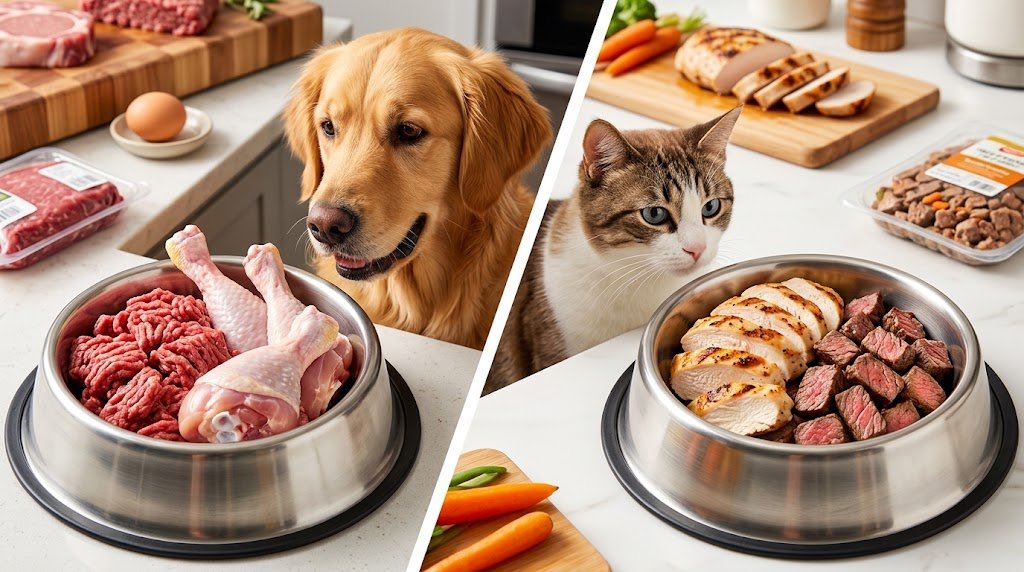
Feeding pets and animals is one of the most important responsibilities of caring for them. Food provides the energy, protein, fats, vitamins, and minerals that animals need to grow, maintain their bodies, stay active, and support normal body functions. Meat is an important food source for many animals, particularly dogs, cats, and other carnivorous or omnivorous species. However, an important question often comes up among pet owners: Is there a difference between feeding raw meat and cooked meat to pets and animals? The short answer is yes. Raw and cooked meat can differ in terms of safety, digestibility, nutrient availability, bacterial contamination, storage requirements, and the risks associated with bones and preparation.
The debate over raw meat versus cooked meat has become increasingly common. Some pet owners believe that raw meat is more natural because wild animals eat prey without cooking it. Others believe that cooking meat is safer because heat destroys many harmful microorganisms. Both perspectives contain ideas worth understanding, but feeding domestic animals is not exactly the same as observing wild animals. A wild animal may eat raw prey because it has no access to a kitchen or cooking equipment, but that does not mean raw meat is automatically the safest or nutritionally complete choice for a household pet.
When discussing raw meat vs cooked meat for pets, it is also important to understand that the answer depends on the animal. A healthy adult cat does not have exactly the same nutritional requirements as a dog. A puppy does not have the same needs as an adult dog. A growing kitten, pregnant animal, elderly pet, or animal with a medical condition may require even more specialized nutrition. Farm animals, reptiles, birds, and wildlife can have completely different dietary requirements.
Another important point is that “meat” itself is not a complete diet for most domestic pets. Feeding only muscle meat can result in nutritional deficiencies. Dogs and cats require appropriate amounts of protein, fats, minerals, vitamins, and other nutrients. Cats have especially specific nutritional requirements because they are obligate carnivores. Therefore, the question is not simply whether raw or cooked meat is better. It is also about whether the overall diet is complete, balanced, safe, and appropriate for the particular animal.
Understanding the Difference Between Raw and Cooked Meat
Raw meat is meat that has not been heated sufficiently to cook it. It may include beef, chicken, turkey, lamb, rabbit, fish, or other animal tissues. Cooked meat has been exposed to heat, which changes its texture, proteins, moisture content, and microbial safety.
Cooking can kill many bacteria, parasites, and other microorganisms that may be present in raw meat. However, cooking also changes some nutritional properties. Certain heat-sensitive nutrients can be reduced depending on cooking temperature, duration, and method. This does not mean cooked meat becomes nutritionally poor. In many situations, the benefits of reducing microbial hazards are more important than relatively small nutrient changes.
Raw meat also retains its original water content and natural texture. Some pet owners believe that this makes raw meat more biologically appropriate. However, an animal’s ability to digest raw meat does not mean every raw-meat feeding practice is safe.
The method of preparation matters considerably. Raw meat purchased from a reputable source and handled under appropriate food-safety conditions is different from raw meat that has been left at room temperature for hours. Similarly, plain cooked meat is very different from heavily seasoned cooked meat containing onions, garlic, excessive salt, sauces, or other ingredients that may be harmful to pets.
Why Do Some People Feed Raw Meat?
The idea of feeding raw meat to pets is often associated with the concept of a biologically appropriate or ancestral diet. Supporters may argue that dogs evolved from meat-eating ancestors and that cats naturally consume prey without cooking it.
Some owners also report that their pets enjoy raw food and appear to have good energy, healthy coats, or normal digestion while eating it. However, individual experiences do not necessarily prove that a particular feeding method is safer or healthier for every animal.
Raw feeding can also involve more than plain meat. Some raw diets include muscle meat, organs, bones, and other ingredients. The intention is often to imitate the composition of prey.
However, creating a nutritionally balanced diet at home can be difficult. Simply giving an animal pieces of raw chicken, beef, or another meat does not automatically provide every nutrient the animal needs.
Why Do Some People Prefer Cooked Meat?
Cooking meat has one major advantage: heat can reduce or eliminate many disease-causing microorganisms.
Raw meat can carry bacteria such as Salmonella, Campylobacter, certain strains of Escherichia coli, and other pathogens. Some raw meats may also contain parasites. Even when an animal does not become visibly ill, it may potentially carry or shed certain microorganisms.
Cooking therefore provides an important food-safety barrier.
Cooked meat can also be easier for owners to handle safely because it reduces microbial contamination when properly prepared and stored. Plain cooked meat can be used as a food ingredient, treat, or part of an appropriately formulated diet.
However, cooking must be done correctly. Overcooked, heavily seasoned, fried, or processed meat is not automatically healthy simply because it has been cooked.
The Main Difference: Food Safety
The most important difference between raw and cooked meat is often food safety.
Raw meat naturally has a higher risk of carrying harmful microorganisms than properly cooked meat. These microorganisms can potentially cause illness in animals and people.
Animals may sometimes tolerate bacteria that would make humans sick, but that does not mean they are completely protected. Dogs and cats can develop gastrointestinal illness after consuming contaminated food.
There is another concern that is sometimes overlooked. A pet can consume contaminated raw food without showing obvious symptoms and still shed certain pathogens in its feces or saliva. This can create a potential exposure risk for people in the household.
This is particularly important in homes with young children, elderly individuals, pregnant people, or people with weakened immune systems.
Cooking therefore provides a significant safety advantage.
Can Dogs Eat Raw Meat?
Dogs are capable of digesting meat, and many dogs can consume raw animal products without immediate problems. However, the fact that dogs can eat raw meat does not mean raw meat is risk-free.
Dogs can be exposed to bacteria and parasites through raw meat. Some dogs may also experience digestive upset when introduced suddenly to a new diet.
If a dog is fed a home-prepared diet, the owner also needs to consider whether the diet provides sufficient calcium, phosphorus, essential fatty acids, vitamins, trace minerals, and other nutrients.
A dog cannot maintain optimal health simply because its food contains a large amount of protein.
For dogs, the safest long-term feeding strategy is generally one that provides a complete and balanced diet appropriate for their life stage, while taking food-safety considerations seriously.
Can Cats Eat Raw Meat?
Cats are obligate carnivores and naturally obtain many essential nutrients from animal tissues. This is one reason raw meat may appear particularly appropriate for cats.
However, domestic cats still face risks from contaminated raw food. Cats can become infected with certain bacteria or parasites, and they can potentially spread pathogens to humans.
Cats also have specialized nutritional requirements. For example, they require nutrients such as taurine that are essential to normal health. A diet consisting simply of random pieces of muscle meat may not supply everything they need.
Therefore, feeding raw meat to a cat is not equivalent to providing a complete feline diet.
Is Cooked Meat Safe for Dogs and Cats?
Plain, properly cooked meat can be a useful food for many dogs and cats when used appropriately.
The key is preparation.
Meat should generally be cooked without harmful seasonings or ingredients. Onion and garlic, for example, can be dangerous to dogs and cats. Very salty foods, heavily spiced foods, fatty sauces, and certain processed foods may also cause problems.
Cooked meat should also be allowed to cool appropriately before serving and stored safely.
A small amount of plain cooked chicken or turkey may be used as a treat for some pets, but treats should not replace a complete and balanced diet.
Does Cooking Destroy the Nutrients in Meat?
Cooking changes food, but it does not simply destroy all its nutrients.
Protein is altered by heat, a process commonly described as denaturation. This change can actually make some proteins easier to digest.
Certain vitamins can be sensitive to heat, especially when cooking involves high temperatures or water in which nutrients can be lost. However, meat remains a nutrient-rich food after cooking.
The overall nutritional effect depends on the type of meat and cooking method.
Boiling, baking, steaming, grilling, and frying do not produce exactly the same results.
The idea that raw meat automatically contains all its nutrients in a better form is therefore too simplistic.
Does Raw Meat Have More Natural Enzymes?
A common argument in raw feeding is that raw food contains natural enzymes that help digestion.
However, the digestive system of dogs and cats already produces its own digestive enzymes. Food enzymes do not necessarily provide a major nutritional advantage when consumed.
The stomach of carnivorous animals is highly acidic, and the digestive system is designed to break down proteins, fats, and other components of food.
This does not mean raw food is useless. It simply means that the argument that animals require enzymes from raw meat for digestion should not be treated as an established fact.
Raw Meat and Bacterial Contamination
Bacterial contamination is one of the biggest concerns with raw feeding.
Bacteria can be present on the surface or inside certain meat products. Contamination can occur during slaughter, processing, packaging, transportation, storage, or preparation.
Refrigeration slows bacterial growth but does not eliminate all microorganisms.
Freezing may reduce some parasite risks in certain circumstances, but freezing does not reliably eliminate every bacterial hazard.
This is why raw meat should not be considered sterile simply because it has been frozen.
Can Freezing Make Raw Meat Safe?
Freezing can be useful for storage and may reduce certain parasite risks depending on the species, parasite, temperature, and duration. However, freezing is not equivalent to cooking.
Many bacteria can survive freezing. Once meat is thawed, surviving microorganisms can multiply if the food is kept at unsafe temperatures.
Therefore, frozen raw meat should still be handled carefully.
Pet owners should follow appropriate food-storage practices and avoid leaving raw meat at room temperature for long periods.
Raw Meat and Parasites
Some raw animal products can contain parasites. The specific risk depends on the type of meat, geographic location, animal species, production practices, and preparation.
Certain parasites can cause serious illness in animals.
This is one reason veterinarians may discourage feeding raw animal products, especially when the food has not undergone a validated process to control relevant pathogens.
The parasite risk is another reason why raw feeding should not be treated as automatically safer simply because it resembles what wild animals eat.
The Problem With Raw Bones
Raw feeding discussions often include bones.
Bones can provide minerals and chewing activity, but they are not risk-free.
Bones can cause broken teeth, choking, gastrointestinal obstruction, constipation, or injury to the digestive tract. Large or inappropriate bones can be especially dangerous.
Cooked bones are generally considered particularly hazardous because cooking can make bones brittle and more likely to splinter.
Bone fragments can potentially cause serious injuries if swallowed.
Therefore, owners should not assume that any type of bone is safe simply because an animal appears capable of chewing it.
Why Cooked Bones Are Dangerous
Cooking changes the structure of bones.
A cooked bone may become brittle and fracture into sharp pieces. If an animal swallows fragments, they can potentially become lodged in the throat or cause gastrointestinal injury.
This is why giving pets leftover cooked bones from meals is generally a bad idea.
Bones from chicken, turkey, fish, and other animals can present choking or injury hazards.
Even raw bones are not completely risk-free.
Raw Meat and Dental Health
Some raw-feeding advocates suggest that chewing raw meat and bones can improve dental health.
Chewing may mechanically remove some material from teeth, but raw bones can also break teeth or cause mouth injuries.
Dental health is better addressed through veterinary dental care and products specifically designed for oral hygiene.
Pet owners should not rely on raw bones as a substitute for professional dental care.
Digestion of Raw Meat Versus Cooked Meat
Dogs and cats generally have digestive systems capable of processing animal proteins efficiently.
Cooking changes the structure of proteins and may affect digestibility. In many cases, cooking can make proteins easier to digest.
However, digestibility depends on many factors, including the animal’s health, the meat source, cooking method, fat content, and overall diet.
There is no universal rule that raw meat is always easier to digest than cooked meat.
Some animals may tolerate raw meat well, while others may experience vomiting, diarrhea, or abdominal discomfort.
Puppies and Kittens Need Special Consideration
Young animals require particularly careful nutrition.
Puppies and kittens are growing rapidly, so their diets must provide appropriate amounts of energy, protein, calcium, phosphorus, essential fatty acids, vitamins, and other nutrients.
An improperly balanced homemade raw diet can cause nutritional problems during growth.
For example, inappropriate calcium-to-phosphorus ratios can interfere with normal bone development.
Growing animals therefore should not be fed improvised meat-only diets.
Pregnant and Nursing Animals
Pregnant and nursing animals have increased nutritional demands.
Their food needs to support their own health as well as the development and nourishment of offspring.
Nutritional deficiencies during pregnancy can have serious consequences.
For this reason, experimental diets or poorly formulated raw diets are particularly inappropriate during pregnancy unless developed and monitored by a qualified veterinary nutrition professional.
Older Pets and Special-Needs Animals
Senior pets may have changing nutritional requirements. Some older animals develop kidney disease, digestive disorders, dental problems, or other health conditions.
A diet that was tolerated when the animal was young may not be appropriate later.
Similarly, animals with weakened immune systems may be more vulnerable to foodborne infections.
For these animals, food safety can be particularly important.
Raw Meat and Immune System Health
It is sometimes claimed that raw food strengthens the immune system because it is more natural.
However, there is no simple rule that feeding raw meat automatically improves immunity.
Immune health depends on genetics, nutrition, age, vaccination status, stress, underlying disease, and many other factors.
A balanced diet containing appropriate nutrients supports normal immune function, but deliberately exposing an animal to foodborne pathogens is not a reliable way to strengthen immunity.
Can Pets Get Food Poisoning?
Yes. Dogs and cats can develop gastrointestinal illness from contaminated food.
Symptoms may include vomiting, diarrhea, reduced appetite, lethargy, abdominal discomfort, or fever. In serious cases, dehydration and systemic illness can develop.
The severity depends on the pathogen, amount consumed, animal’s age, immune status, and overall health.
If a pet develops significant symptoms after eating raw or contaminated food, veterinary advice should be sought.
Can Humans Get Sick From a Raw-Fed Pet?
This is an important concern.
Foodborne pathogens can move through a household environment. A raw-fed pet may contaminate food bowls, floors, surfaces, or hands.
Some microorganisms can also be shed through feces.
Even if the pet appears healthy, people can potentially be exposed during food preparation, cleaning bowls, handling feces, or interacting with the animal.
Good hygiene is therefore essential for households that choose to feed raw diets.
Why Children Need Extra Protection
Young children often touch floors, pet bowls, toys, and animals and may put their hands in their mouths.
This makes hygiene especially important in households with pets.
Children should not handle raw pet food or pet bowls containing raw food.
Adults should wash their hands after preparing pet food, cleaning feeding areas, or handling animal waste.
Raw Meat and Household Hygiene
If someone chooses to feed raw meat, hygiene becomes extremely important.
Raw meat should be stored separately from human food when possible. Preparation surfaces should be cleaned and disinfected appropriately. Hands should be washed after handling the food.
Pet bowls should be cleaned regularly.
Uneaten raw food should not be allowed to sit around for long periods.
These precautions can reduce contamination risks, although they cannot eliminate them completely.
Is Commercial Raw Pet Food Safer?
Commercial raw pet foods may undergo specific processing and quality-control procedures, but “commercial” does not automatically mean “risk-free.”
Some products are formulated to be complete and balanced, while others are intended only as treats or supplemental foods.
Consumers should read labels carefully and determine whether a product is intended to provide complete nutrition.
They should also follow storage and handling instructions.
A commercially prepared raw diet may be nutritionally better formulated than an improvised homemade diet, but the microbiological risks associated with raw ingredients can still remain.
The Importance of a Complete and Balanced Diet
Whether food is raw or cooked, nutritional completeness matters.
A diet based only on muscle meat can lack important nutrients.
Dogs require a carefully balanced combination of nutrients. Cats have even more specific nutritional requirements.
Organ meats can provide certain vitamins and minerals, but feeding organs in inappropriate proportions can also create nutritional problems.
Bones contain minerals, but they can introduce physical hazards and do not solve every nutritional requirement.
This is why complete commercial diets are often convenient for pet owners.
Meat as a Treat Instead of a Main Diet
Plain cooked meat can often be used as a treat for healthy pets, assuming the specific meat and preparation are safe.
Treats should generally remain a smaller part of the overall diet.
If a pet receives too many treats, it may consume too many calories or displace nutritionally complete food.
Treats should therefore complement rather than replace a balanced diet.
Can Cooked Chicken Be Given to Pets?
Plain cooked chicken is commonly used as a pet treat or temporary food under veterinary guidance.
It should be unseasoned and free of onions, garlic, sauces, and excessive fat.
Bones should be removed.
Skin can be high in fat, so large amounts may not be appropriate for every animal.
Chicken should be thoroughly cooked and handled safely.
Can Raw Chicken Be Given to Pets?
Raw chicken can contain harmful bacteria, including Salmonella and Campylobacter.
Dogs and cats may sometimes consume raw chicken without becoming visibly ill, but that does not eliminate the contamination risk.
Raw chicken also presents risks associated with bones and cross-contamination.
Therefore, raw chicken should not automatically be considered a safer or healthier option simply because poultry is commonly consumed by animals in the wild.
What About Raw Beef?
Raw beef can also carry bacteria and parasites.
The risks depend on handling, source, processing, and preparation.
Cooked beef can reduce many microbial hazards when prepared properly.
If beef is used as part of a pet’s diet, it should be nutritionally appropriate and prepared without harmful seasonings or ingredients.
What About Raw Fish?
Raw fish introduces additional considerations.
Certain fish contain enzymes or compounds that can interfere with nutrient metabolism when consumed in large amounts or under particular circumstances. Some raw fish can also carry parasites.
Cooking changes these risks.
Fish can be a useful source of protein and certain fatty acids, but it should be offered appropriately and not treated as automatically safe simply because cats or dogs may enjoy it.
Processed Meat Is Different
Processed meats such as sausages, bacon, deli meats, and heavily seasoned meats are different from plain raw or cooked meat.
They may contain high levels of salt, fat, preservatives, spices, or other ingredients.
Some may contain ingredients that are harmful to pets.
Therefore, giving pets table scraps from processed meats is not a good way to provide animal protein.
Seasonings That Can Be Dangerous
Human meals often contain ingredients that animals should not eat.
Onions and garlic are particularly important examples because they can damage red blood cells in dogs and cats.
Large amounts of salt can also be harmful.
Some sauces and spice mixtures may contain multiple ingredients that are unsuitable for animals.
Therefore, if meat is being offered to a pet, plain preparation is generally preferable.
Raw Meat and Allergies
Some pets have food allergies or sensitivities.
A pet may react to a specific protein source regardless of whether the meat is raw or cooked.
Common signs of food-related problems can include skin irritation, itching, gastrointestinal symptoms, or recurrent ear problems.
If a food allergy is suspected, randomly changing between raw and cooked diets may make diagnosis more difficult.
Veterinary guidance can help identify an appropriate elimination diet or dietary strategy.
Raw Meat and Weight Management
Raw meat is not automatically low-calorie.
Some cuts contain significant amounts of fat. High-fat diets may contribute to excessive calorie intake and can cause digestive problems in some animals.
Weight management depends on total calorie intake, activity level, age, body condition, and health.
A pet can gain weight on either a raw or cooked diet if it consumes more calories than it needs.
Hydration and Meat
Raw meat contains substantial water, while cooking can reduce moisture depending on the method.
This can influence the physical characteristics of the food.
However, pets should always have access to clean drinking water.
Wet foods can contribute to total water intake, but they should not be considered a replacement for normal access to fresh water.
Food Storage Matters
Raw meat requires careful refrigeration and storage.
It should not be left at room temperature for extended periods.
Cooked meat also requires safe storage, although cooking reduces the initial microbial load.
Both raw and cooked food can spoil if stored improperly.
Pet owners should follow food-storage principles similar to those used for human food.
Raw Meat and Odor
Some owners prefer cooked food because it may be easier to handle and store without the odor associated with raw meat.
Raw feeding can involve more frequent cleaning of bowls, surfaces, refrigerators, and preparation areas.
This may not matter to every household, but it is a practical consideration.
Cost Differences
The cost of feeding raw or cooked meat varies greatly.
A homemade raw diet may appear inexpensive if inexpensive cuts are used, but once nutritional supplements, organ meats, appropriate ingredients, storage, and preparation are included, the total cost may increase.
Commercial complete pet food may sometimes be more convenient and economical.
Cost should therefore be evaluated based on the entire diet rather than the price of individual meat portions.
Time and Convenience
Cooked meat can require preparation, but commercially prepared pet foods are often extremely convenient.
Raw diets may require additional freezer space, careful portioning, thawing, cleaning, and handling.
For busy households, these practical factors can be important.
A diet that is difficult to maintain consistently may not be ideal even if it looks good in theory.
What About Wild Animals?
Wild carnivores often consume raw prey.
This is sometimes used as evidence that domestic pets should eat raw meat.
However, wild animals live under very different conditions.
They have different lifespans, disease exposures, diets, reproductive patterns, and environmental pressures.
Wild animals also experience parasites and foodborne diseases. Survival in nature does not mean that every feeding behavior is optimal for long-term health.
Domestic animals have also lived alongside humans for generations and can thrive on carefully formulated diets.
Therefore, wild feeding behavior should not automatically be copied at home.
Dogs Are Not Wolves
Dogs share ancestry with wolves, but domestic dogs are not simply wolves living in houses.
Their evolutionary history includes adaptation to human environments and changes in diet and metabolism.
Dogs can digest a broader range of foods than strict carnivores.
This does not mean dogs should eat unlimited human food. It means that their nutritional biology should not be reduced to the statement that “dogs are wolves, so they need raw meat.”
Cats Are Not Small Wild Cats
Cats retain many characteristics of obligate carnivores.
They require specific nutrients that are naturally abundant in animal tissues.
However, domestic cats can receive these nutrients through properly formulated commercial foods.
A diet does not need to be raw to provide essential feline nutrients.
The important question is whether the diet is nutritionally complete and safe.
Does Raw Meat Improve a Pet’s Coat?
Some owners report improved coat quality after changing to a raw diet.
Coat condition can indeed improve when an animal receives adequate protein, essential fatty acids, vitamins, and minerals.
However, improvement does not prove that raw meat itself is responsible.
If the previous diet was nutritionally inadequate and the new diet provides better nutrition, the improvement may result from better nutrient balance rather than the raw state of the food.
Does Raw Meat Improve Energy?
Some owners also report that pets appear more energetic after changing diets.
Energy levels can change for many reasons, including calorie intake, nutrient balance, body weight, exercise, age, and underlying health.
Therefore, increased energy should not automatically be attributed to raw meat.
A balanced cooked diet can also support normal energy levels.
Does Cooking Make Meat Less Natural?
Cooking certainly changes meat.
However, “natural” does not automatically mean “safe” or “better.”
Many things found in nature can be dangerous to domestic animals.
Cooking is a technology humans developed partly to improve food safety and digestibility.
Therefore, the fact that raw meat is closer to its original state does not automatically make it the healthiest choice.
The Role of Veterinary Advice
Veterinarians can help evaluate an animal’s nutritional and medical needs.
This becomes particularly important when an owner wants to feed a homemade diet, raw diet, or special diet.
A veterinarian can consider the animal’s age, breed, weight, activity level, health status, medications, and nutritional requirements.
For complex homemade diets, a veterinary nutrition specialist may be appropriate.
Professional advice is especially important for puppies, kittens, pregnant animals, elderly pets, and animals with medical conditions.
Common Mistakes When Feeding Raw Meat
One common mistake is assuming that meat alone is a complete diet.
Another is ignoring bacterial contamination.
Some owners also give inappropriate bones or fail to account for the animal’s calorie requirements.
Others switch diets suddenly, which can cause gastrointestinal upset.
Another mistake is assuming that because an animal has eaten raw meat several times without becoming ill, the practice has no risks.
Absence of an immediate problem does not prove that a feeding method is risk-free.
Common Mistakes When Feeding Cooked Meat
Cooked meat can also be fed incorrectly.
One common mistake is adding seasonings intended for humans.
Another is giving cooked bones.
Feeding excessive amounts of fatty meat can cause digestive problems or excessive calorie intake.
Another mistake is replacing a complete pet diet with plain cooked meat for an extended period.
Cooking solves some food-safety problems but does not automatically make every meat-based diet nutritionally complete.
How to Make a Safe Decision
When deciding between raw and cooked meat, pet owners should consider several factors.
The animal’s age and health should come first.
The nutritional completeness of the diet is extremely important.
Foodborne pathogen risk should be considered.
Household members should also be taken into account.
If the home contains young children, elderly individuals, pregnant people, or immunocompromised individuals, the potential consequences of pathogen exposure may be greater.
The owner’s ability to safely store, prepare, and clean raw food is also important.
Raw Meat Versus Cooked Meat: The Bigger Picture
The debate can sometimes become too focused on whether raw or cooked food is “natural.”
A better question is: Which diet provides complete nutrition while minimizing preventable risks for this particular animal?
For many pets, a commercially prepared complete and balanced diet provides a practical way to meet nutritional requirements.
Plain cooked meat can sometimes be used as an additional food or treat.
Raw feeding can be done by some owners, but it requires careful attention to nutrition and hygiene and does carry microbiological risks.
There is no need to treat the issue as a simple battle between two feeding philosophies.
A Balanced Perspective
Raw meat is not automatically poisonous, and cooked meat is not automatically perfect.
Raw meat can provide protein, fat, moisture, and other nutrients, but it can also carry pathogens and create nutritional and physical risks if the overall diet is poorly designed.
Cooked meat can reduce many microbial risks and may be highly digestible, but it can become unsuitable if it contains harmful seasonings, cooked bones, excessive fat, or if it is fed as an incomplete long-term diet.
The best feeding choice depends on the whole dietary plan.
Frequently Asked Questions
Is raw meat healthier than cooked meat for pets?
There is no universal rule that raw meat is healthier. Raw meat may provide appropriate nutrients, but it also carries foodborne pathogen risks. Properly cooked meat can be highly nutritious and may reduce microbial hazards. The overall nutritional balance of the diet is more important than whether the meat is raw or cooked.
Can dogs eat raw meat every day?
Dogs can physically digest raw meat, but feeding raw meat every day does not automatically provide a complete and balanced diet. Raw diets can also expose dogs and household members to pathogens. Anyone considering a long-term raw diet should discuss nutritional formulation and safety with a veterinarian or veterinary nutrition professional.
Can cats eat raw meat?
Cats can consume animal tissues and are biologically adapted to meat-based nutrition, but raw meat can contain bacteria and parasites. Plain muscle meat also does not necessarily provide all nutrients a cat requires. A complete and balanced feline diet is essential.
Is cooked meat safer than raw meat?
Properly cooked meat is generally safer from a microbial perspective because sufficient heat can kill many harmful bacteria and parasites. However, cooked meat must still be handled and stored safely and should not contain harmful ingredients.
Are raw bones safe for dogs?
Raw bones are not completely risk-free. They can cause choking, broken teeth, digestive obstruction, constipation, or gastrointestinal injuries. The safety depends on the bone, animal, size, chewing behavior, and other factors.
Can pets eat cooked bones?
Cooked bones are particularly concerning because cooking can make them brittle and more likely to splinter. Sharp fragments can cause serious injuries. It is generally safer to avoid giving pets cooked bones.
Does freezing raw meat kill bacteria?
Freezing can slow or stop bacterial growth while the food remains frozen, but many bacteria can survive freezing. Therefore, freezing should not be considered a substitute for proper cooking or hygiene.
Can raw meat make pets sick?
Yes. Raw meat can contain bacteria, parasites, or other pathogens capable of causing illness. Some pets may show no obvious symptoms while still shedding certain organisms.
Can a raw-fed pet make humans sick?
There is a potential risk. Contaminated raw food, food bowls, preparation surfaces, feces, and other household areas can become sources of pathogen exposure. Careful hygiene is particularly important.
Is plain cooked chicken good for dogs?
Plain, fully cooked, boneless chicken can be suitable as an occasional food for many healthy dogs. It should not contain onion, garlic, heavy seasoning, or excessive fat. It should also not replace a complete and balanced diet.
Is raw chicken safe for cats?
Raw chicken can contain harmful bacteria, so it is not risk-free. Cats can also be exposed to pathogens through raw poultry. If a cat is fed a raw diet, food safety and nutritional completeness need careful attention.
Does cooking remove all nutrients from meat?
No. Cooking changes some nutrients and can reduce certain heat-sensitive vitamins depending on the cooking method, but cooked meat remains a valuable source of protein and other nutrients.
Does raw meat contain more protein?
The protein content of raw and cooked meat can appear different partly because cooking changes water content. Cooking can reduce moisture, which means nutrients can appear more concentrated per unit of weight. This makes simple raw-versus-cooked comparisons misleading.
Should puppies eat raw meat?
Puppies have specialized nutritional needs because they are growing. An improperly formulated raw diet can create deficiencies or mineral imbalances. A complete growth diet is especially important.
Should kittens eat raw meat?
Kittens require carefully balanced nutrition for rapid growth and development. Random raw meat is not a complete kitten diet. Nutritional adequacy and food safety are particularly important during this stage.
Is raw feeding natural?
Raw feeding resembles some aspects of what wild carnivores eat, but natural does not automatically mean safe or nutritionally optimal for domestic animals. Wild animals also experience parasites, infections, injuries, and food shortages.
Can cooked meat replace pet food?
Plain cooked meat should generally not replace a nutritionally complete and balanced pet diet unless a properly formulated homemade diet has been developed to meet the animal’s nutritional requirements.
Final Thoughts
The difference between feeding raw meat and cooked meat to pets and animals is much bigger than simply whether the meat has been heated. Raw and cooked meat differ in microbial safety, handling requirements, digestibility, moisture, nutrient availability, and potential hazards.
The strongest advantage of cooking is food safety. Proper cooking can destroy many harmful microorganisms that may be present in raw meat. This can reduce the risk of foodborne illness for both animals and humans. Raw meat, on the other hand, may be tolerated by some animals but still carries potential bacterial and parasitic risks.
At the same time, cooked meat is not automatically a complete diet. Plain cooked chicken, beef, turkey, or other meats can provide valuable nutrients, but feeding only muscle meat for a long period can leave an animal deficient in essential nutrients. Cats and growing animals have particularly specific nutritional requirements.
Raw feeding also requires more than simply placing raw meat in a bowl. A properly formulated diet needs to account for protein, fat, essential fatty acids, vitamins, minerals, and other nutrients. Hygiene, refrigeration, preparation surfaces, food bowls, and waste handling must also be carefully considered.
The most important lesson in the raw meat vs cooked meat for pets discussion is that nutrition and safety should be considered together. The goal should not simply be to choose the food that seems most natural. The goal should be to provide the animal with a complete, balanced, appropriate, and safe diet.
For healthy adult animals, plain properly cooked meat can often be a useful addition to an appropriate diet when served in reasonable amounts and without harmful ingredients. Raw diets may be chosen by some pet owners, but they require careful planning and carry food-safety concerns that should not be ignored.
Puppies, kittens, pregnant animals, elderly pets, and animals with medical conditions require additional caution because their nutritional needs and ability to handle dietary risks can differ significantly.
Ultimately, the best diet is the one that meets the individual animal’s nutritional requirements while minimizing preventable health hazards. Food should support the animal’s long-term health rather than simply satisfy hunger.
So, yes, there is a meaningful difference between raw and cooked meat. Raw meat can resemble the food eaten by wild carnivores, but it can carry pathogens and does not automatically provide complete nutrition. Cooked meat can reduce many microbial risks and remain highly nutritious, but it must be prepared appropriately and should not be confused with a complete diet.
Understanding these differences allows pet owners to make more informed decisions and focus on what matters most: keeping their animals healthy, properly nourished, and safe.
:::
