
Currently Empty: $0.00

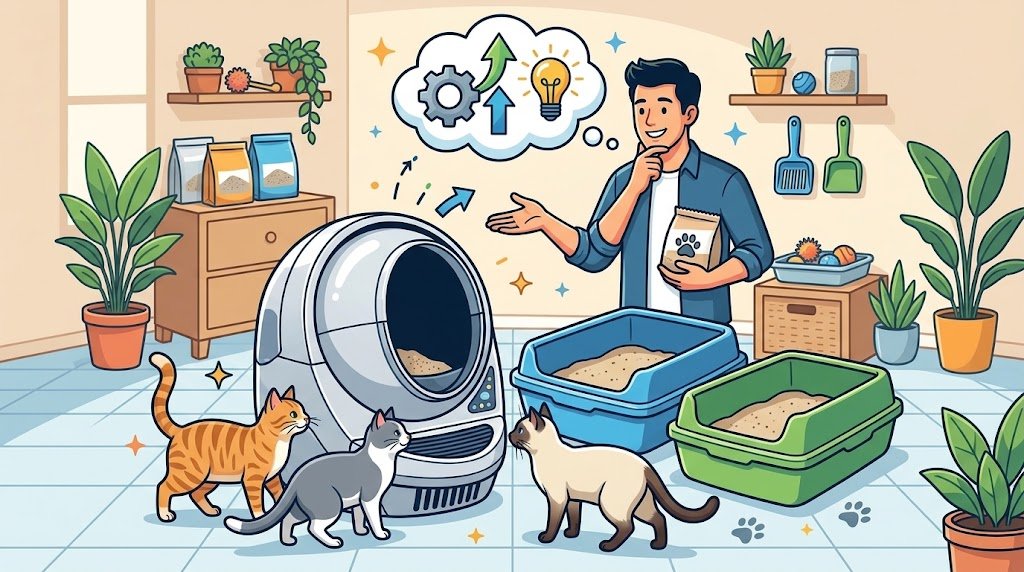
What Kind of Litter Box Is Best for Multiple Cats
Managing litter boxes in a single-cat household is relatively simple, but once a second, third, or fourth cat joins the family, litter box logistics become considerably more complicated. Cats are naturally territorial about their bathroom habits, and getting the litter box setup wrong in a multi-cat household is one of the most common causes of inappropriate elimination, litter box avoidance, and household stress, both feline and human.
This guide covers everything you need to know about choosing and managing litter boxes for multiple cats: the different types available, how many boxes you actually need, sizing considerations, placement strategy, and maintenance routines that keep a multi-cat litter setup functional and low-stress for everyone involved.
Why Litter Box Choice Matters More With Multiple Cats
In a single-cat home, a cat has exclusive use of the litter box and can develop consistent, predictable habits around it. In a multi-cat home, several additional dynamics come into play that make the right equipment and setup far more important.
Territorial behavior affects box usage. Cats can be possessive about litter boxes, and a more dominant or anxious cat may guard access to a box, discouraging other cats in the household from using it freely. This can lead to house-soiling incidents that have nothing to do with litter box cleanliness and everything to do with social dynamics.
Odor and waste accumulate faster. More cats mean more frequent use of each box, which accelerates odor buildup and waste accumulation if the box isn’t sized, placed, and maintained appropriately for the household’s total cat population.
Preferences can differ between cats. Individual cats can have different preferences for litter texture, box depth, or box style (covered versus open), and a setup that works well for one cat in the household may be actively avoided by another.
Illness can be harder to detect. In a single litter box shared by multiple cats, it becomes more difficult to monitor which cat’s waste looks unusual, which can delay identifying early signs of a health issue in one particular cat.
Space and cleaning demands increase. More boxes, spread across more locations, requires more consistent scooping and cleaning discipline to prevent a multi-cat household from developing persistent odor problems.
Because of these factors, choosing the right type, size, and number of litter boxes—and maintaining them properly—is significantly more important in a multi-cat household than in a single-cat one.
The Golden Rule: How Many Litter Boxes Do You Actually Need?
Before discussing which type of litter box is best, it’s worth addressing the most commonly cited guideline in multi-cat litter box management: the general recommendation is one litter box per cat, plus one additional box. This means a two-cat household would ideally have three litter boxes, and a three-cat household would have four.
This guideline exists because it reduces the likelihood of territorial conflict over a limited number of boxes and ensures that even if one cat temporarily “claims” a particular box, other cats still have unclaimed options available. It also reduces the odds that a box becomes so heavily used between cleanings that a cat chooses to avoid it due to sheer buildup of waste.
That said, this guideline is a helpful starting point rather than an absolute rule for every household. Some multi-cat households with especially sociable, non-territorial cats function well with a slightly lower ratio, while households with cats who show any signs of tension or avoidance behavior may benefit from more boxes than the guideline suggests. Watching your specific cats’ behavior and adjusting from there is more effective than rigidly following a fixed number regardless of what you observe.
Types of Litter Boxes and How They Perform in Multi-Cat Homes
Open, Standard Litter Boxes
Open, uncovered litter boxes are the simplest and most widely used type. In multi-cat households, they offer a few specific advantages:
- Full visibility in and out of the box, which some cats prefer since it reduces the feeling of being trapped or ambushed by another cat while using the box
- Easier and faster to clean and inspect
- Generally lower cost, making it more feasible to provide the recommended number of boxes across a larger household
The main downside is reduced odor containment and a greater likelihood of litter scatter outside the box, both of which become more pronounced with heavier multi-cat usage.
Covered or Hooded Litter Boxes
Covered litter boxes contain odor and litter scatter better than open boxes, but they come with meaningful trade-offs in a multi-cat context:
- They can trap odor inside the box itself, creating an unpleasant environment for the next cat to use, especially if not scooped frequently
- The enclosed design can make some cats feel more vulnerable to being cornered or ambushed by another cat while inside, which is a particular concern in households with any territorial tension
- Limited visibility of surroundings while inside can increase anxiety for more cautious or lower-ranking cats in the household hierarchy
Covered boxes can still work well in multi-cat homes with generally harmonious relationships between cats, particularly if scooped frequently enough to prevent odor buildup, but they’re a riskier choice in households with any existing tension between cats.
Large or Extra-Large Litter Boxes
Simply upsizing to a larger box, whether open or covered, offers real benefits in a multi-cat setting:
- More surface area for digging and covering waste, which most cats prefer
- Reduces the odds of a cat stepping in or near existing waste when multiple cats have used the box between cleanings
- Provides more room for a cat to fully turn around and position comfortably, which matters especially for larger breed cats or households with bigger cats
Extra-large boxes are one of the most consistently recommended upgrades for multi-cat households, since box size has a direct impact on how quickly a box becomes unpleasant between cleanings.
Top-Entry Litter Boxes
Top-entry boxes, where cats enter through an opening in the lid rather than the side, are effective at containing litter scatter and limiting the spread of tracked litter through the house. However, they carry specific risks in multi-cat homes:
- The single, often narrow entry point can be more easily guarded or blocked by a dominant cat, discouraging other cats from entering
- Some cats, especially seniors, larger cats, or cats with mobility issues, may find the jump-and-climb-in design physically difficult
- Limited visibility while inside creates the same ambush-vulnerability concern as covered boxes, sometimes to an even greater degree due to the narrower opening
Top-entry designs are generally less recommended for multi-cat households, particularly those with any social tension, due to these access and vulnerability concerns.
Self-Cleaning or Automatic Litter Boxes
Automatic litter boxes, which mechanically separate waste from clean litter after each use (often using sensors to detect when a cat has finished), have grown significantly in popularity, including for multi-cat households. Advantages include:
- Reduced manual scooping labor, particularly valuable in busy multi-cat households where manual scooping frequency can be difficult to maintain consistently
- Waste removed promptly after each use can help keep the box more consistently clean between human interventions, which may reduce avoidance behavior related to a dirty box
However, there are multi-cat-specific considerations:
- Most self-cleaning boxes are designed with a maximum recommended number of cats per unit, and exceeding this can overwhelm the mechanism’s waste capacity between service intervals
- The mechanical cleaning cycle, along with its associated noise, can startle some cats, particularly more anxious individuals, which may lead to avoidance
- Multiple cats using the same automatic box in close succession can sometimes interfere with the sensor-based cleaning cycle, depending on the specific unit’s design
For multi-cat households considering an automatic litter box, it’s often more effective to use multiple standard or extra-large boxes for at least some of the household’s needs, supplementing with one or more automatic units, rather than relying entirely on automatic boxes to meet the full one-per-cat-plus-one guideline.
Litter Box Furniture and Enclosures
Furniture-style litter box enclosures, which disguise a litter box within a piece of furniture, offer aesthetic benefits for the household but carry similar access and ventilation concerns to covered and top-entry boxes. If used in a multi-cat home, prioritize designs with adequate ventilation and a reasonably wide, easy entry point to avoid discouraging use.
Choosing the Right Combination for Your Household
Given the trade-offs among box types, most successful multi-cat litter setups don’t rely on a single box style throughout the household. Instead, a mixed approach often works best:
- Provide a majority of open or large open boxes, since these tend to be the most universally accepted option across cats with different preferences and social standings within the household.
- Limit covered or top-entry boxes to households with confirmed harmonious relationships between cats, and monitor usage patterns closely after introducing them.
- Consider one automatic litter box as a supplement, not a full replacement, particularly in households where keeping up with manual scooping across multiple boxes is a genuine challenge.
- Match box size to your largest cat, not your smallest. A box appropriately sized for your biggest cat will comfortably accommodate smaller cats as well, while the reverse isn’t true.
Litter Box Placement in Multi-Cat Households
Choosing the right box type is only part of the equation; where boxes are placed throughout the home matters just as much for multi-cat harmony.
Spread Boxes Across Multiple Locations, Not Just Multiple Rooms Next to Each Other
Placing all litter boxes in a single room, even if there are enough boxes to meet the one-per-cat-plus-one guideline, can allow a single dominant cat to effectively guard access to all of them at once. Spreading boxes across different areas of the home reduces the likelihood that one cat can monopolize access to litter facilities entirely.
Avoid High-Traffic or Noisy Areas
Litter boxes placed near loud appliances, high-foot-traffic hallways, or other unpredictable disturbances can discourage regular use, particularly for more anxious cats. Quieter, calmer locations tend to see more consistent use.
Ensure Easy Access for All Cats, Including Seniors
If your household includes senior cats or cats with mobility limitations, ensure at least some litter boxes are placed on the same level the cat spends most of their time on, avoiding the need to navigate stairs, and choose boxes with lower entry sides for easier access.
Avoid Placing Boxes Near Food and Water
Cats generally prefer their bathroom areas to be separate from where they eat and drink, and this preference doesn’t change in multi-cat households. Keep litter boxes in separate areas from feeding stations throughout the home.
Provide Multiple Escape Routes Near Each Box
Placing boxes in locations with more than one way in and out, rather than a single narrow access point, reduces the likelihood that one cat can corner or block another cat’s access to a box, which is a significant contributor to litter box-related stress and avoidance in multi-cat homes.
Litter Type Considerations for Multi-Cat Households
While box type and placement get most of the attention, the litter itself also plays a meaningful role in multi-cat success.
Clumping vs. Non-Clumping Litter
Clumping litter is generally preferred in multi-cat households because it makes it significantly easier to remove waste from individual cats promptly, without needing to fully change the entire box’s contents as frequently as non-clumping litter typically requires.
Unscented vs. Scented Litter
Most veterinary behaviorists and cat care experts recommend unscented litter for multi-cat households, since cats generally have a strong sense of smell and heavily scented litters can be more likely to discourage use compared to milder, unscented options.
Consistency Across Boxes
Using the same litter type and depth across all boxes in the household, rather than experimenting with different litters in different boxes, tends to create more predictable, comfortable conditions for all cats sharing the space.
Litter Depth
Maintaining an adequate, consistent litter depth (generally a few inches, though preferences can vary by cat) across all boxes ensures cats can dig and cover waste comfortably, which is an important part of normal elimination behavior and can reduce stress-related avoidance if depth is inconsistent.
Maintenance Routines for Multi-Cat Litter Boxes
Scoop at Least Once or Twice Daily
With multiple cats sharing a smaller number of boxes than they would have individually, waste accumulates faster. Daily, or even twice-daily, scooping helps prevent any single box from becoming unpleasant enough to trigger avoidance behavior.
Fully Clean and Replace Litter Regularly
Beyond daily scooping, periodically emptying, washing, and refilling each box with fresh litter helps address residual odor and bacterial buildup that scooping alone doesn’t fully resolve.
Rotate Cleaning Schedules Across All Boxes
In a household with several boxes, it can be easy to focus cleaning attention on the box that’s most visible or most frequently observed being used, while neglecting others. Establish a consistent rotation to ensure every box receives regular attention, not just the most obviously used ones.
Monitor for Behavioral Changes
Pay attention to any sudden changes in a specific cat’s litter box habits, such as new avoidance of a previously used box, elimination outside the box, or unusual frequency of visits, since these can be early indicators of either a social conflict within the household or an underlying health issue requiring veterinary attention.
Replace Boxes Periodically, Not Just Litter
Over time, plastic litter boxes can absorb odor into the material itself, even with regular cleaning, and scratches on the surface can harbor bacteria. Replacing boxes periodically, particularly heavily used ones in a multi-cat household, helps maintain a genuinely fresh environment rather than one that merely appears clean on the surface.
Signs Your Multi-Cat Litter Box Setup Needs Adjustment
- One or more cats consistently avoiding a specific box. This often indicates either a territorial issue with another cat guarding that box, or a specific dislike of that box’s type, location, or litter.
- House-soiling outside the litter box area. While this can indicate a medical issue requiring veterinary evaluation, it can also point to an inadequate number of boxes, poor placement, or social tension among the household’s cats.
- Visible tension or guarding behavior near litter boxes. If you observe one cat waiting near or blocking access to a box while another cat is nearby, this is a clear sign that the number or placement of boxes may not be adequately addressing the household’s social dynamics.
- Rapid odor buildup despite regular scooping. This may indicate the boxes are undersized for the number of cats using them, or that the litter type or depth needs adjustment.
- A cat rushing in and out of a box unusually quickly. This can indicate discomfort with the box itself, such as a startling automatic cleaning cycle, an enclosed design that feels unsafe, or anxiety about being interrupted by another cat.
Frequently Asked Questions
What is the best type of litter box for multiple cats? Large, open litter boxes tend to work best as the primary option in most multi-cat households, since they offer full visibility, easy escape routes, and are generally well accepted across cats with different preferences and social standing.
How many litter boxes do I need for two or three cats? A commonly recommended starting point is one litter box per cat plus one additional box, meaning three boxes for two cats and four boxes for three cats, adjusted based on your specific cats’ behavior and any signs of tension or avoidance.
Are covered litter boxes bad for multi-cat households? Not necessarily, but they carry more risk of trapping odor and creating a sense of vulnerability for cats inside, particularly in households with any tension between cats. They tend to work better in households with confirmed calm, non-territorial relationships between cats.
Can one self-cleaning litter box handle multiple cats? Most self-cleaning litter boxes have a recommended maximum number of cats per unit, and exceeding this can overwhelm the mechanism. It’s generally more effective to use a self-cleaning box as a supplement alongside standard boxes rather than relying on a single automatic unit for an entire multi-cat household.
Why is my cat avoiding the litter box even though it’s clean? Avoidance can result from social tension with another cat guarding the box, an uncomfortable box type or location, or in some cases an underlying medical issue, so any sudden or persistent avoidance behavior is worth discussing with a veterinarian in addition to reviewing your litter box setup.
Final Thoughts
Choosing the best litter box for a multi-cat household goes well beyond picking a single “best” product, since success depends on the right combination of box type, size, quantity, placement, and consistent maintenance tailored to your specific cats’ needs and relationships with one another. Large, open boxes tend to be the safest general choice, supplemented thoughtfully with other box types only where household dynamics support them, spread across multiple accessible, low-traffic locations, and maintained with consistent daily scooping and periodic deep cleaning. By observing your cats’ actual behavior and adjusting the setup accordingly, you can create a litter box arrangement that keeps every cat in the household comfortable, reduces the risk of house-soiling, and supports a calmer, more harmonious multi-cat home.