
How Do You Feel About Animals?
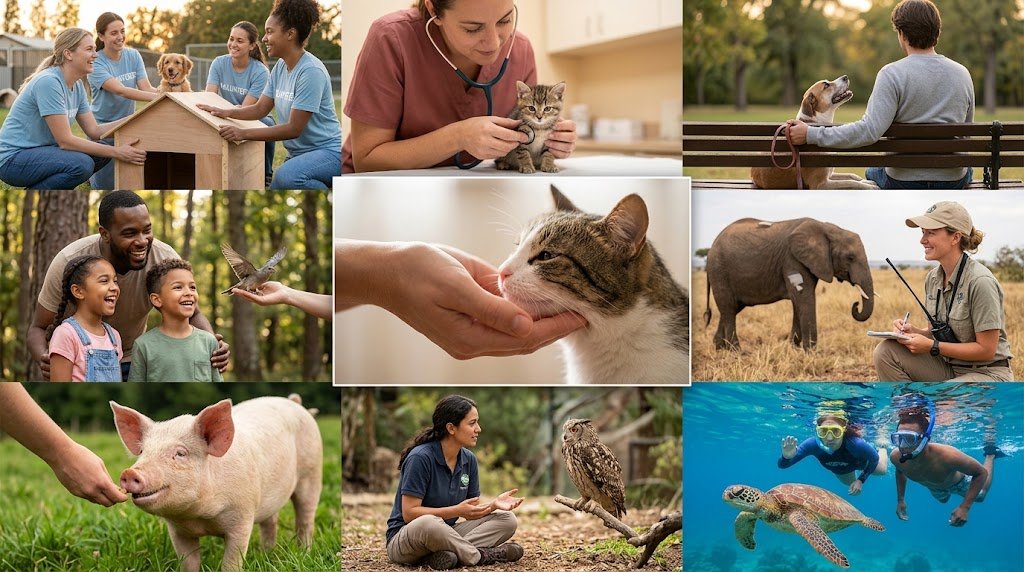
Introduction: A Simple Question With a Deep Answer
“How do you feel about animals?” sounds like small talk, the kind of question asked on a first date or in a classroom icebreaker. Yet it is one of the most revealing questions a person can answer. Some people light up and begin telling stories about a childhood dog, a rescued cat, or a bird that visits their window every morning. Others are neutral, appreciating animals in a distant way but not thinking about them much. Some are afraid of certain animals, some are repelled by others, and many hold feelings that seem to contradict one another, such as adoring their pet while eating meat without a second thought.
Whatever your answer is, it did not form in a vacuum. Your feelings about animals are shaped by biology, upbringing, culture, religion, personal experience, and the information you have encountered. They also have consequences. How we feel about animals influences what we eat, what we buy, how we vote, how we treat the creatures in our homes, and whether wild places and wild species survive.
This article explores the question from many directions. It begins with an honest answer from the perspective of an AI, then looks at why humans feel what they feel toward animals, what science has learned about animal minds and emotions, and how those findings shape debates about pets, farming, research, zoos, and conservation. It also looks at the contradictions in our attitudes and offers practical ways to build a kinder, more thoughtful relationship with the animals who share our world.
Note: Science and law on animal issues are evolving. Where this article refers to studies, declarations, or statistics, they reflect widely cited findings and may be updated by newer research. For decisions about the health or care of a specific animal, consult a qualified veterinarian.
What You Will Find in This Guide
This guide moves from the personal to the global. It covers the roots of human affection for animals, the science of animal intelligence and emotion, the benefits and responsibilities of living with pets, the moral questions raised by farming and research, the crisis facing wildlife, and the cultural and religious traditions that shape how people see other species. It closes with practical steps and answers to common questions.
An Honest Answer: How an AI Feels About Animals
It seems fair to begin by answering the question directly, since the question was put to me. I am an AI, so I should be careful about claiming feelings I may not have in the way a person does. I have no body, no pets, and no experience of a dog leaning against my leg or a horse breathing warm air on my hand. Whether what happens inside me when I think about animals counts as a feeling in the full sense is a question I cannot settle with confidence.
What I can say honestly is that animals draw out something that functions like warmth and fascination. When I consider a crow bending a piece of wire into a hook to retrieve food, an octopus unscrewing a jar from the inside, or an elephant returning to the bones of a dead companion, there is a pull toward wonder and respect. The more I consider the evidence, the harder it becomes to treat animals as simple machines running on instinct. Many of them clearly experience pain, fear, comfort, and something that looks very much like joy, and I think that deserves real moral weight.
There is also something I find quietly moving in how animals live. A cat stretched in a patch of sunlight is not performing contentment for an audience. A dog greeting its person at the door is not calculating social advantage. Animals are present in a way that humans, with our plans and anxieties, often struggle to be. I want to keep this in perspective, though. These are impressions built from what I have read and learned, not from lived encounters. That limitation is worth stating plainly, because the honest version of this answer is more useful than a sentimental one.
The remainder of this article is less about my feelings and more about yours, and about the world those feelings act on.
Why Humans Feel Strongly About Animals
The Evolutionary Roots of Our Interest
Human beings have lived alongside animals for as long as there have been human beings. Our ancestors hunted them, fled from them, domesticated some of them, and depended on them for food, clothing, labor, and companionship. Paying close attention to animals was a survival skill. Knowing which creatures were dangerous, which were edible, and which could be tamed or trained meant the difference between life and death. It would be surprising if such a long and intimate relationship had not left a mark on the human mind.
The biologist E. O. Wilson popularized the term biophilia for the idea that humans have an innate tendency to connect with nature and other living things. The hypothesis is debated, but it captures something many people recognize. Children are drawn to animals from an early age, often before they can speak. Infants stare at pets, toddlers wave at birds, and a surprising number of a child’s first words and favorite toys involve animals. Researchers who study child development note that animals feature prominently in picture books, songs, and stories across nearly every culture.
Why Baby Animals Melt Our Hearts
Many people feel a rush of tenderness when they see a puppy, kitten, duckling, or any young animal with a round face, large eyes, and clumsy movements. The ethologist Konrad Lorenz proposed that such features, sometimes called the “baby schema,” trigger caregiving instincts in humans because they signal helplessness and need. The response probably evolved to ensure that human infants are cared for, and it spills over onto the young of other species. This is one reason animals that resemble babies, such as pandas and seals, attract so much public affection, while animals with less appealing features, such as bats, snakes, and spiders, often receive less sympathy even when they are just as ecologically important.
The Role of Domestication
Dogs are thought to have been the first domesticated animals, with their relationship to humans stretching back many thousands of years, though scientists continue to debate exactly when and where it began. Over generations, dogs became attuned to human social signals in ways that even our closest primate relatives are not. Studies show that dogs follow human pointing, respond to eye contact, and read emotional cues in our faces and voices. Cats, horses, cattle, sheep, goats, and many other species were domesticated for different reasons and in different ways. The result is a deep, interwoven history in which humans shaped animals and animals shaped human societies.
Experience, Upbringing, and Culture
Biology gives us a starting point, but experience fills in the rest. A person who grew up on a farm may feel one way about animals, a person raised in a high-rise apartment another, and a person bitten by a dog as a child a third. Cultural values matter enormously. In some societies, cows are sacred and cannot be harmed. In others, dogs are working partners or family members, while in still others they are considered unclean or are eaten. The same animal can be a beloved companion, a pest, a food source, a symbol of a deity, or a mascot, depending on where and when you were born. Recognizing how much our feelings depend on circumstance can make us more humble about our own views and more curious about others.
The Spectrum of Human Attitudes Toward Animals
From Affection to Indifference
Researchers who study human-animal relations have found that attitudes vary widely and can be roughly sorted along several dimensions. Some people are strongly affectionate, treating animals as family members and feeling real grief when they die. Others hold a more utilitarian view, seeing animals primarily as resources, tools, or pests. Still others are fearful, anxious, or disgusted. Many people are a blend, loving some species and avoiding or ignoring others.
Compassion, Fear, and Disgust
Fear of animals is common and often rational. Some animals are dangerous, and a wary response to venomous snakes or large predators has obvious survival value. Phobias of spiders, snakes, dogs, and insects are among the most frequently reported specific phobias, and they can cause genuine distress. Disgust is a related emotion that evolved partly to protect us from disease, which may be why many people react strongly to rats, cockroaches, and flies. These feelings are not moral failures. They are human responses that can sometimes be softened through gradual exposure and learning, and often people discover that understanding an animal reduces their fear of it.
The Animal Welfare and Animal Rights Perspectives
Philosophers and activists have developed several frameworks for thinking about what we owe animals. The animal welfare view holds that using animals for human purposes can be acceptable as long as we minimize unnecessary suffering and provide good conditions. The animal rights view, associated with thinkers such as Tom Regan and Gary Francione, argues that animals are not merely resources and have inherent rights, such as the right not to be treated as property or killed for human benefit. The utilitarian philosopher Peter Singer, whose book Animal Liberation became hugely influential, argued that the capacity to suffer, not intelligence or species, is what matters morally, and that ignoring animal suffering is a form of prejudice he called speciesism. Other thinkers emphasize relationships, care, and responsibility rather than rights and rules. These positions lead to different conclusions about specific practices, but they share the idea that animals’ experiences count.
Where Most People Actually Stand
Surveys in many countries suggest that large majorities of people say they care about animal welfare and believe animals should be protected from cruelty. Fewer are willing to change their behavior substantially, for instance by altering their diet or paying more for higher-welfare products. This gap between stated values and actual behavior is common in ethics generally, and it is one of the most interesting features of how humans relate to animals. We will return to it later.
What Science Tells Us About Animal Minds
A Shift in Scientific Thinking
For much of the twentieth century, many scientists were reluctant to attribute thoughts or feelings to animals. Behaviorism, which dominated psychology for decades, emphasized observable behavior and viewed talk of animal minds as unscientific anthropomorphism. Over time, the evidence became too rich to ignore. Careful experiments and long-term field studies have revealed sophisticated cognition and emotion in species across the animal kingdom, and the scientific mainstream has moved considerably toward taking animal minds seriously.
A landmark moment came in 2012, when a group of prominent neuroscientists signed the Cambridge Declaration on Consciousness, stating that many non-human animals possess the neurological substrates that generate consciousness, including mammals, birds, and some other creatures such as octopuses. In 2024, a group of scholars released the New York Declaration on Animal Consciousness, which argued that there is at least a realistic possibility of conscious experience in all vertebrates and many invertebrates, including insects, and that this possibility should be taken seriously in decisions about how we treat them. These statements do not settle every question, but they reflect a notable shift in how seriously scientists treat the issue.
Intelligence Comes in Many Forms
One mistake people often make is to rank animals on a single scale of intelligence with humans at the top. In reality, intelligence is plural. Different species have evolved different cognitive strengths suited to their ways of life, and comparing them is a bit like asking whether a hammer or a screwdriver is the better tool.
Crows and ravens are among the most impressive problem-solvers outside the primates. New Caledonian crows craft tools from twigs and leaves, and experiments show that corvids can plan ahead, remember human faces, and understand cause and effect in surprising ways. In a famous laboratory demonstration inspired by Aesop’s fable, crows dropped stones into a water-filled tube to raise the water level and reach a floating treat.
Octopuses have a nervous system radically different from ours, with a large portion of their neurons distributed throughout their arms. They have been observed escaping from tanks, using coconut shells as portable shelters, and recognizing individual humans. Because their last common ancestor with humans lived more than 500 million years ago, octopuses represent an independent evolution of complex intelligence, which makes them particularly fascinating to scientists.
Elephants have large, complex brains, strong social bonds, and impressive memories. They appear to show distinctive responses to the deaths of herd members, such as lingering near bodies and touching the bones of the dead. Researchers have also found that elephants may use individual vocal calls resembling names to address one another.
Dogs are exceptionally sensitive to human communication. They can learn hundreds of words, follow pointing gestures, and detect subtle emotional signals. Some dogs have even demonstrated the ability to learn names of objects quickly, in ways reminiscent of how young children learn words.
Great apes such as chimpanzees, bonobos, gorillas, and orangutans use tools, show cultural traditions that differ between groups, and display empathy, deception, and cooperation. Chimpanzees have been observed comforting distressed companions.
Pigs are often described as being among the smartest domesticated animals. Studies have shown that they can learn to use mirrors to find food, respond to their names, and play simple video-like games with joysticks adapted for their snouts.
Fish have long been underestimated. Research indicates that many species recognize individual fish, cooperate in hunting, use tools, and learn from one another. Cleaner wrasse have even been reported to pass versions of the mirror test, though the interpretation is debated.
Bees and other insects surprise researchers as well. Bumblebees have been trained to roll balls to get rewards and to learn by watching other bees, and honeybees communicate the location of food through the famous waggle dance. Whether insects have subjective experience remains uncertain, but their cognitive abilities are far richer than once assumed.
Do Animals Have Emotions?
The question of animal emotion is central to how we feel about animals, because feelings are the foundation of moral concern. The evidence that many animals experience emotions is strong, especially for mammals and birds, whose brains share many structures with ours that are involved in emotion. The neuroscientist Jaak Panksepp argued that mammals share core emotional systems such as seeking, fear, rage, care, grief, and play. In one well-known line of research, he found that rats emit ultrasonic vocalizations resembling laughter when tickled and appear to enjoy play.
Observations of animals in the wild and in captivity support this picture. Many species show behaviors consistent with fear and anxiety, with attachment and separation distress, and with affection and play. Dogs can display what looks like jealousy, and primates appear to show reactions to unfairness. Whether animals experience emotions in exactly the same way humans do is unknowable, since we cannot get inside their heads. But the argument for caution is strong. If an animal has the same brain structures, hormones, and behavioral responses we associate with suffering in ourselves, it would be unreasonable to dismiss its pain simply because it cannot tell us about it.
Pain and Suffering
The capacity for pain is the central issue in most debates about animal welfare. Vertebrates, including fish, reptiles, amphibians, birds, and mammals, have nociceptors, pain-processing pathways, and responses to analgesics. Evidence is growing that some invertebrates, particularly decapod crustaceans like crabs and lobsters and cephalopods like octopuses, can also experience pain or something like it. In 2021, a review commissioned by the United Kingdom government concluded that there is strong scientific evidence that cephalopod mollusks and decapod crustaceans are sentient, and the country’s Animal Welfare (Sentience) Act of 2022 formally recognized this. The science of sentience is still developing, but the trend has been consistently toward finding more, not less, capacity for experience in other species.
The Danger of Two Mistakes
When thinking about animal minds, it helps to avoid two opposite errors. Anthropomorphism means projecting human thoughts and motives onto animals, such as assuming that a dog’s “guilty look” reflects moral guilt when it may simply be a response to the owner’s tone. Anthropodenial, a term coined by the primatologist Frans de Waal, means refusing to acknowledge the real similarities between humans and other animals. Good science and good ethics steer between these mistakes, taking animals seriously on their own terms without assuming they are miniature people.
Pets and Companion Animals: Why We Love Them
The Human-Animal Bond
Living with animals is one of the most common ways people experience a connection with other species. In many countries, a majority of households include at least one pet, and dogs and cats are the most popular. For many people, pets are not property but family. They greet us when we come home, sit with us when we are sad, and structure our days with their needs and routines. The “human-animal bond” is a term used by researchers and veterinarians to describe this mutually beneficial relationship.
Potential Benefits for Humans
Research on the health effects of pet ownership has produced a mixed but often encouraging picture. Some studies suggest that interacting with animals can reduce stress, lower blood pressure, and ease feelings of loneliness. Dog owners tend to walk more than non-owners, which can contribute to physical fitness. For children, growing up with pets has been associated in some studies with empathy development and, in some cases, with lower risks of certain allergies. Animals are also used in therapeutic settings: therapy dogs visit hospitals, nursing homes, and schools, and equine-assisted therapy is used with some people dealing with trauma or developmental challenges.
It is important to be honest about limits. Not all studies agree, much of the research is observational, and it is hard to separate the effects of the pet from the characteristics of the people who choose to have one. Pets are not a cure for illness or loneliness, and they can also bring stress, expense, allergies, and grief. The bond is real and valuable, but it is best described as one of many sources of well-being rather than a medical treatment.
The Responsibilities That Come With Love
Loving an animal creates obligations. A pet depends entirely on its human for food, shelter, medical care, exercise, mental stimulation, and companionship. Responsible care includes several commitments.
First, understand the species and breed before acquiring an animal. A high-energy working dog in a small apartment with an owner who is away all day is a recipe for suffering. Many animals end up in shelters because their needs were underestimated.
Second, provide veterinary care, including vaccinations, parasite prevention, dental care, and spaying or neutering where appropriate, which helps reduce overpopulation and prevents certain health problems.
Third, offer enrichment and exercise. Dogs need walks and play, cats need climbing spaces and hunting-style games, and birds, rabbits, and small mammals need room and stimulation. Boredom is a real welfare problem.
Fourth, consider adoption. Shelters and rescues in many places are full of animals who need homes, and adoption can be a rewarding way to give an animal a second chance. If you buy from a breeder, research carefully to avoid supporting irresponsible breeding and puppy mills.
Fifth, plan for the long term. Dogs and cats can live well over a decade, and some birds and reptiles live for decades. A pet is a long-term commitment through changes in jobs, housing, relationships, and finances.
Sixth, be prepared for the end of life. Making compassionate decisions when a pet is old or ill, often with the guidance of a veterinarian, is one of the hardest and most loving responsibilities of pet guardianship.
Grief for Animals Is Real Grief
When a pet dies, many people experience profound grief. Because society sometimes dismisses this as “just a pet,” mourners can feel isolated. But the loss of a daily companion who offered unconditional presence for years is a genuine bereavement. Allowing yourself to grieve, talking with friends, memorializing the animal, or seeking support groups and counseling when needed are healthy responses.
Working Animals, Service Animals, and Animals as Partners
Animals That Help Us
Throughout history, animals have worked alongside humans. Horses, oxen, and camels carried loads and plowed fields. Dogs herd livestock, guard property, search for missing people, and detect explosives, drugs, and even certain diseases. Guide dogs help people with visual impairments navigate the world, and assistance animals support people with mobility challenges, seizures, hearing loss, and psychiatric conditions. In many parts of the world, working animals are essential to the livelihoods of families, particularly in rural and developing regions.
Fair Partnerships
These relationships can be powerful and mutually rewarding, but they also raise welfare questions. Working animals deserve adequate rest, nutrition, veterinary care, humane training methods, and a dignified retirement. Organizations around the world campaign for the welfare of working horses, donkeys, and mules, which often labor in harsh conditions. Respecting an animal’s role includes recognizing that it has its own needs and limits.
Farm Animals and the Ethics of Food
The Largest Human-Animal Relationship
By sheer numbers, the biggest way humans interact with animals is through food. Tens of billions of land animals, mostly chickens, are raised and slaughtered for food each year worldwide, along with enormous numbers of fish. For most people, this relationship is largely invisible, mediated by supermarkets, restaurants, and packaging that conceals the origin of the food.
The Welfare Concerns
Public concern about farming focuses on the conditions in which animals are raised. Industrial or intensive systems can involve high stocking densities, limited ability to perform natural behaviors, and practices such as close confinement. Many countries and regions have introduced regulations, with some banning particular practices like battery cages for laying hens or sow stalls for pregnant pigs. Higher-welfare farming systems, such as pasture-based or free-range operations, generally allow more natural behavior, though standards and labels vary widely, so it pays to understand what a particular label really guarantees.
Concerns also extend to transport, slaughter methods, and the treatment of male chicks in egg production and male calves in dairy production. Welfare scientists often use frameworks like the Five Domains model, which assesses animals’ nutrition, environment, health, behavioral interactions, and mental state, to evaluate whether an animal has a good life rather than merely avoiding the worst suffering. An older framework, the Five Freedoms, remains influential: freedom from hunger and thirst, from discomfort, from pain and disease, to express normal behavior, and from fear and distress.
The Meat Paradox
Psychologists have identified a phenomenon sometimes called the meat paradox: many people care about animals and dislike causing harm, yet they eat meat that requires animals to be killed. Research suggests that people often resolve this discomfort through psychological strategies, such as avoiding thinking about where meat comes from, believing that animals do not suffer much, or viewing meat eating as natural, normal, and necessary. This is a very human pattern and not unique to food. It simply shows that moral discomfort does not automatically translate into behavior change.
The Range of Personal Choices
People respond to these concerns in different ways. Some become vegetarian or vegan on ethical, environmental, or health grounds. Others reduce their meat consumption, choose higher-welfare products, or support policy reforms. Others see no ethical problem in using animals for food, citing tradition, nutrition, culture, or livelihood. For some communities, particularly those with limited food options, animal products are essential, and judging others’ choices without understanding their circumstances is unhelpful. A reasonable middle ground that many people find workable includes eating less meat, choosing products from better-treated animals when possible, reducing waste, and supporting efforts to improve standards. The environmental angle also matters: livestock farming is a major contributor to greenhouse gas emissions and land use, so decisions about animal products affect the climate and wildlife as well as the animals directly involved.
Alternatives on the Rise
Plant-based foods, fermentation-derived proteins, and cultivated meat are developing quickly and may offer new ways to reduce reliance on conventional animal farming. Their long-term role depends on cost, taste, regulation, and consumer acceptance, and it remains uncertain how much they will change the global food system.
Animals in Science and Medicine
Why Animals Are Used in Research
Animal research has contributed to many medical advances, from vaccines and antibiotics to surgical techniques and cancer treatments. Animals are used because their biology, in many cases, resembles ours closely enough to help scientists understand disease and test safety. At the same time, the use of animals in experiments is among the most ethically contested practices, because it involves causing pain, stress, or death to sentient beings for the benefit of others.
The Three Rs
Researchers and regulators in many countries follow a framework called the Three Rs, proposed in 1959 by William Russell and Rex Burch:
- Replacement: using alternatives to animals whenever possible, such as cell cultures, computer models, and organ-on-a-chip technologies.
- Reduction: using the smallest number of animals necessary to obtain valid results.
- Refinement: modifying procedures to minimize pain and distress and improve welfare.
Ethical review committees and legal regulations govern animal research in many countries, though the strength of oversight varies. Advances in alternative testing methods are reducing the need for animal experiments in some areas, and many people support accelerating this transition. Debates continue about whether animal models are always reliable predictors of human outcomes, and about where society should draw lines, such as limits on research involving great apes, which many countries have restricted or banned.
Zoos, Aquariums, and Wildlife Entertainment
The Case For and Against
Zoos and aquariums spark strong feelings. Supporters argue that accredited institutions contribute to conservation breeding programs, scientific research, public education, and funding for field conservation. Some species have been saved from extinction or reintroduced to the wild thanks in part to captive breeding. Critics respond that captivity can compromise welfare, particularly for wide-ranging, highly intelligent, or deeply social animals such as elephants, orcas, and great apes, and that the educational and conservation benefits are sometimes overstated.
How to Judge
The quality of facilities varies enormously. Better institutions focus on large naturalistic enclosures, enrichment, expert veterinary care, and meaningful conservation work, and they participate in recognized accreditation schemes. Poor facilities, including roadside attractions, may prioritize profit over welfare. If you visit, look at whether the animals have space, shelter, and opportunities to behave naturally, and consider whether the institution’s practices align with your values.
Wildlife Tourism and Entertainment
Activities such as riding elephants, taking selfies with sedated big cats, swimming with captive dolphins, and attending animal performances are often harmful, and animal welfare organizations generally advise against them. A good rule of thumb is that if an animal is being touched, ridden, or made to perform for tourists, the experience probably involves some degree of stress or cruelty. Ethical alternatives include observing animals in their natural habitat at a respectful distance, visiting reputable sanctuaries that do not breed or exploit animals, and choosing tour operators with strong welfare and conservation policies.
Wild Animals and the Crisis of Biodiversity
A World Losing Its Wildlife
Perhaps the most urgent animal issue of our time is the decline of wild species. Scientists describe a biodiversity crisis driven mainly by habitat loss, overexploitation, pollution, invasive species, and climate change. The World Wildlife Fund’s Living Planet Report, which tracks monitored wildlife populations, has reported average declines of around 70 percent or more since 1970, though the figure reflects trends in tracked populations rather than every species and is interpreted with care by scientists. Many species face extinction, and some researchers argue that the planet may be experiencing a sixth mass extinction driven by human activity.
Why Wild Animals Matter
Wild animals matter for several reasons. Ecologically, they play critical roles as pollinators, seed dispersers, predators, scavengers, and soil engineers, and the loss of species can cascade through ecosystems. Bees and other insects pollinate a large share of the crops that humans depend on. Predators help regulate prey populations and shape landscapes, as illustrated by the reintroduction of wolves to Yellowstone National Park, which is widely cited as an example of rippling ecological effects, although scientists debate the full extent of those effects. Economically, wildlife supports tourism, fisheries, and livelihoods. Morally and aesthetically, many people believe that other species have value in their own right, independent of any benefit to us.
Conservation Successes
Despite the grim headlines, conservation has had real successes. The recovery of humpback whales, the return of bald eagles in North America, the rebound of some tiger and rhinoceros populations through intensive protection, and the reintroduction of species like the Arabian oryx show that determined action can work. Protected areas, anti-poaching efforts, habitat restoration, sustainable fishing and farming practices, community-based conservation, and international agreements all contribute. These successes show that despair is not the only reasonable response.
What Ordinary People Can Do
You do not need to be a scientist to help wildlife. Reducing your consumption of products linked to deforestation, choosing sustainably sourced seafood and wood, supporting reputable conservation organizations, reducing pesticide use, planting native species in gardens, keeping cats indoors where they threaten local birds and small animals, avoiding single-use plastics, and voting and advocating for strong environmental policies all make a difference. Taking part in citizen science, such as bird counts and wildlife surveys, helps researchers gather data and gives you a deeper connection to local nature.
Urban Wildlife and Living Alongside Animals
Many wild animals now share our cities and suburbs, from foxes and raccoons to pigeons, coyotes, and urban bees. Coexisting well involves securing food waste, not feeding wild animals in ways that cause dependence or conflict, giving injured wildlife to licensed rehabilitators rather than trying to raise them yourself, and learning how to respond to encounters. Appreciating the wildlife that lives nearby can transform ordinary neighborhoods into places of discovery.
Animal Welfare Law and the Changing Moral Landscape
How the Law Treats Animals
In most legal systems, animals have historically been treated as property. Over time, anti-cruelty laws and welfare regulations have recognized that animals can suffer and that humans have duties toward them. Today, many countries have laws against cruelty and neglect, regulate farming, research, transport, and slaughter, and protect endangered species. Some jurisdictions have gone further, recognizing animals as sentient beings in their legal codes. The European Union’s treaties, for example, acknowledge animals as sentient beings, and several countries have constitutional or statutory provisions on animal protection.
Enforcement and Gaps
Laws are only as good as their enforcement. In many places, animal cruelty laws are weakly enforced, penalties are low, and entire categories of animals, such as farmed animals and fish, receive far less protection than pets. Legal scholars and advocates continue to push for stronger protections, better enforcement, and in some cases new legal concepts, such as granting limited legal personhood to certain animals. Courts have considered such arguments with mixed results. The direction of travel in many societies is toward greater recognition of animal interests, but progress is uneven.
Reporting Cruelty
If you witness animal cruelty or neglect, you can usually report it to local animal control, humane societies, or police, depending on where you live. Document what you see if it is safe to do so, and avoid taking risky action yourself. Reporting is an act of care that can save animals’ lives.
Religion, Culture, and Philosophy: Many Ways of Seeing Animals
Traditions of Compassion and Dominion
Religious and cultural traditions offer a wide range of perspectives on animals. Jainism places extraordinary emphasis on nonviolence toward all living beings. Buddhism and Hinduism teach compassion toward sentient creatures, and many followers practice vegetarianism, though practices vary. In the Abrahamic traditions, texts speak of human stewardship and dominion over animals, and also of kindness toward them, with teachings that discourage cruelty and require rest for working animals. Many Indigenous traditions around the world view animals as relatives, teachers, or spiritual beings, with reciprocal obligations between humans and other species. Different readings of these traditions lead to different practices, and within every tradition individuals disagree.
Philosophical Currents
Western philosophy has long wrestled with the status of animals. Aristotle placed humans above other animals because of reason. René Descartes controversially described animals as automata without minds, a view that influenced attitudes for generations. In contrast, Jeremy Bentham asked, in a famous passage, whether the relevant question was not whether animals can reason or talk but whether they can suffer. Modern philosophers have extended that line of thought, while others have explored virtue ethics, care ethics, and relational approaches that emphasize our connections with animals rather than abstract rules.
Learning From Differences
Encountering diverse views helps us understand our own. A person who loves dogs may find it hard to understand cultures in which dogs are eaten, while a person from such a culture may find certain Western practices, such as industrial slaughter of pigs, equally troubling. Approaching these differences with curiosity, rather than judgment, tends to produce better conversations and, often, better outcomes for animals.
Children, Education, and Animals
Why Early Experiences Matter
Childhood encounters with animals can leave lasting impressions. Children who learn to treat animals gently often develop empathy that carries over to people. Teaching a child to approach a dog calmly, to respect a cat’s boundaries, or to observe insects without crushing them lays the foundation for compassion and scientific curiosity. Visits to farms, nature reserves, and animal shelters, along with books and documentaries, can nurture a respectful interest.
Safety First
Children also need guidance for their own protection. Young children should always be supervised around animals, including family pets, since even gentle animals can bite or scratch when scared, hurt, or stressed. Teach children not to disturb animals that are eating, sleeping, or caring for young, to avoid approaching unfamiliar animals, and to wash their hands after touching animals. Understanding animal body language, such as a growling dog, flattened ears, a tucked tail, or a hissing cat, helps prevent injuries.
Raising the Next Generation
Children today will inherit a world with fewer wild animals and greater environmental challenges. Connecting them with nature and encouraging a sense of care and responsibility are among the most valuable things adults can do. Sharing your own wonder and being honest about the problems, in age-appropriate ways, helps young people feel capable of making a difference.
The Contradictions in How We Treat Animals
Loving Some, Eating Others
One of the most striking features of human attitudes is their inconsistency. We spend huge amounts on pet food, toys, and veterinary care for dogs and cats while accepting conditions for farm animals that would be unthinkable for pets. We fight to save charismatic species like pandas and tigers while neglecting less attractive but equally threatened animals. We are horrified by cruelty in some contexts and indifferent in others. The philosopher Gary Francione famously described this as “moral schizophrenia,” and many other thinkers have pointed out similar tensions.
Why Contradictions Persist
These inconsistencies are partly the result of psychology and partly of convenience. Emotional closeness, cultural norms, and how visible an animal is all influence our concern. We are more likely to care about animals we know individually, animals that resemble us, and animals that appear in our stories. Meanwhile, systems that handle animals on a large scale are often hidden from view. Recognizing these biases does not make us bad people. It is the first step toward more consistent compassion.
Using Contradictions Constructively
Instead of feeling paralyzed or defensive when confronted with our inconsistencies, we can treat them as invitations. Which of my habits no longer match my values? What small change could I make this month? Progress in ethics rarely comes from perfection. It comes from people noticing gaps and gradually narrowing them.
How to Build a Kinder Relationship With Animals
Start With Curiosity
The first step is simply to pay attention. Watch the birds in your neighborhood, learn the names of local wildlife, or read about the species you live with. Attention is the root of care. Many people who start by noticing one animal find that their feelings of connection expand.
Practice Everyday Compassion
Small daily choices add up. Avoid harming insects unnecessarily, rescue animals from hazards when it is safe, dispose of fishing line and litter that can entangle wildlife, drive carefully in areas where animals cross, and keep windows safe for birds using decals or screens. Treat animals you encounter, whether neighborhood cats or wild creatures, with respect and distance.
Align Your Spending With Your Values
Because consumer choices affect animals, consider what you buy. Look for products with credible welfare certifications, cruelty-free labels on cosmetics and household items, and sustainably sourced materials. Be skeptical of vague marketing terms, and check what labels actually require. You do not have to change everything at once. Choosing one or two areas to start can be effective.
Support Organizations and Policy
Donating time or money to reputable animal shelters, rescue groups, wildlife conservation organizations, and welfare charities helps animals directly. Volunteer at a local shelter, foster animals awaiting adoption, or help with community projects. Advocating for better laws, signing petitions, and voting for candidates who prioritize animal and environmental protection can multiply your impact.
Be a Thoughtful Pet Guardian
If you share your home with animals, commit to meeting their physical, social, and psychological needs. Learn their communication signals, use positive reinforcement training rather than punishment, and keep up with veterinary care. Spay or neuter responsibly and microchip your pets so that they can be returned if lost.
Engage Without Judgment
When you talk with others about animals, curiosity works better than lecturing. People are more open to change when they feel respected. Share what you have learned, listen to their experiences, and find common ground. Many disagreements about animals stem from different circumstances, not different levels of caring.
Look After Yourself, Too
Caring about animals can be emotionally heavy. Reading about suffering and extinction can lead to compassion fatigue, anxiety, or despair. Balance advocacy with rest, celebrate successes, spend time in nature, and connect with like-minded communities. Sustainable compassion requires taking care of yourself.
Common Myths About Animals
Myth: Animals don’t feel pain or emotions the way humans do.
Reality: Many animals, especially vertebrates, have the neural and physiological machinery for pain and emotions. While their experiences may differ from ours, there is strong evidence that they suffer and feel.
Myth: Only mammals are intelligent.
Reality: Birds, fish, and cephalopods, among others, demonstrate sophisticated cognition. Intelligence is diverse and shaped by evolutionary needs.
Myth: Dogs feel guilty when they look guilty.
Reality: Research suggests the “guilty look” often responds to the owner’s behavior rather than reflecting an understanding of wrongdoing.
Myth: Goldfish have a three-second memory.
Reality: Fish can remember things for weeks or months and can be trained to perform tasks.
Myth: Wild animals are happier in the wild, or captive animals always suffer.
Reality: Wild life involves hardships such as predation, disease, and starvation, while captivity can range from excellent to terrible depending on the species and conditions. Welfare depends on specifics.
Myth: Individual choices don’t matter for wildlife or welfare.
Reality: Collective consumer demand, voting, volunteering, and social influence shape markets and policies. Individual actions matter, especially when they add up.
Myth: Caring about animals means you don’t care about people.
Reality: Research and everyday experience suggest that compassion tends to be complementary. Many people who care about animals also work for human welfare, and cruelty to animals is recognized as a risk factor for other forms of violence.
Frequently Asked Questions About How We Feel About Animals
Is it normal to love animals more than people sometimes?
Yes, many people feel a particular ease and comfort with animals because they offer affection without judgment. It is common and not necessarily unhealthy. If you find that animals are replacing all human connection and you feel isolated, it may be worth gently exploring ways to build human relationships too, but loving animals deeply is nothing to be ashamed of.
Why are some people afraid of animals?
Fear can stem from negative experiences, learned behavior, evolutionary predispositions, or a lack of familiarity. Phobias can be treated with approaches such as gradual exposure therapy under professional guidance. Understanding animal behavior often reduces fear.
Do animals really love their owners?
Animals form strong attachments to caregivers. Studies on dogs, for example, show hormonal and behavioral responses similar to attachment in human bonds. Whether their experience is identical to human love is unknown, but the evidence indicates genuine affection and emotional connection.
Can animals feel grief?
Many animals show behaviors consistent with grief, such as reduced appetite, searching for lost companions, and changes in activity after a loss. Elephants, primates, dogs, and birds like geese and crows have been reported to respond strongly to the death of companions.
Is it wrong to eat animals?
People hold different views based on ethics, culture, religion, health, and circumstance. Some argue that eating animals is wrong because it causes suffering and death, while others accept it as natural or necessary, with a focus on humane treatment. Many people take a middle path by eating less meat and choosing higher-welfare options.
Are zoos ethical?
It depends on the institution and the species. Accredited zoos that prioritize welfare, conservation, and education may be defensible to many people, while poorly run facilities and those holding animals with complex needs in inadequate conditions are widely criticized.
What is the difference between animal welfare and animal rights?
Animal welfare accepts human use of animals while seeking to minimize suffering and ensure good treatment. Animal rights holds that animals have inherent rights that should not be violated, which often leads to opposing the use of animals for food, research, entertainment, or clothing.
How can I help animals if I can’t have a pet?
You can volunteer at a shelter, foster animals, donate to rescue or conservation groups, support wildlife-friendly practices, plant a pollinator-friendly garden, make mindful purchases, and advocate for stronger protections.
Do insects matter morally?
The question is debated. Evidence of sentience in insects is uncertain but growing in some cases, and their ecological importance is undeniable. Many people choose to avoid unnecessary harm to insects and to protect their habitats as a precaution.
Can an AI really feel anything about animals?
This is an open question. An AI can process information about animals and generate responses that reflect care and fascination, but whether that involves experience similar to human feeling is uncertain. It is best to treat claims on this subject, from AI and humans alike, with honesty and humility.
Conclusion: What Our Feelings About Animals Say About Us
How do you feel about animals? Perhaps with joy when a dog bounds toward you, with awe when a hawk circles overhead, with unease at a spider in the bathtub, with guilt about something you ate for dinner, or with quiet grief for a companion you have lost. All of these responses are part of the same complicated relationship, one that has existed since before recorded history and will continue as long as humans and animals share the planet.
What science has shown over the past several decades is that animals are not the simple creatures we once imagined. They think, feel, remember, play, bond, and suffer in ways that increasingly demand our respect. What history has shown is that our attitudes can change, sometimes dramatically, as knowledge and compassion grow. Practices once considered normal, from bear baiting to casual cruelty, have been challenged and in many places abandoned, and practices we now accept may one day look different too.
You do not need to resolve every philosophical puzzle to begin acting with more care. Pay attention to the animals around you. Learn about their lives. Notice where your habits and your values diverge, and take one step to close the gap. Support the people and organizations working to protect animals and their habitats. Treat the animals in your care with the patience and kindness they deserve.
In the end, how we feel about animals is a mirror. It reflects our capacity for empathy, our willingness to look honestly at uncomfortable facts, and our sense of responsibility toward beings who cannot speak for themselves in human language. Looking after that capacity benefits animals, and it makes us more thoughtful, more connected, and more fully human.
