
Currently Empty: $0.00

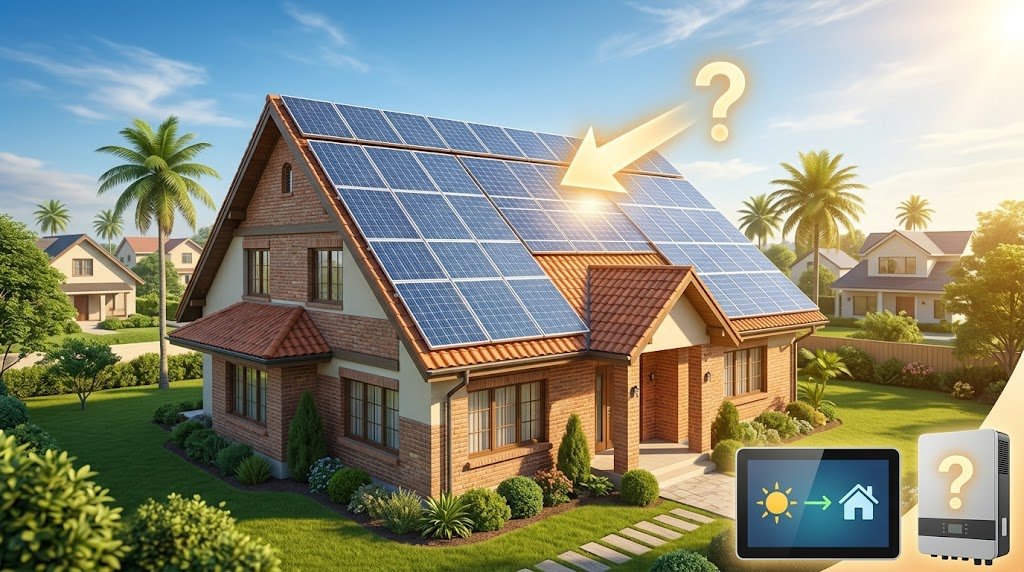
How to Choose the Best Solar Panel System for Your Home
Introduction
Solar energy has moved from a niche, environmentally motivated choice to a mainstream financial decision for millions of homeowners. Falling equipment costs, improving efficiency, expanding financing options, and rising traditional electricity rates have made rooftop solar an increasingly attractive investment. But choosing the right solar panel system for your specific home is far more complex than picking the panels with the highest efficiency rating or the lowest price per watt.
A solar system is a long-term investment, typically expected to perform reliably for 25 years or more. Getting the choice right involves understanding panel technology, system sizing, inverter types, battery storage options, installer quality, financing structures, and how your specific roof, climate, and energy usage patterns all interact. Getting it wrong can mean an undersized system that doesn’t meaningfully reduce your electricity bill, an oversized system that wastes money on unused capacity, or a poorly installed system that underperforms for years without you realizing it.
This guide walks through everything a homeowner needs to know to choose the best solar panel system for their specific situation — from understanding the core technology, to sizing a system correctly, to evaluating installers, financing options, and the often-overlooked details that separate a great solar investment from a mediocre one.
Why Choosing the Right Solar System Matters So Much
A 25-Year Investment Deserves Careful Planning
Most solar panels come with a 25-year performance warranty, and a well-installed system can continue producing meaningful power well beyond that timeframe. Because the investment horizon is so long, small differences in system quality, sizing accuracy, or installer competence compound significantly over the decades of use.
Upfront Cost Is Substantial
Even with financing options and incentives, a home solar system represents one of the larger financial decisions many homeowners make, often comparable to a kitchen renovation or a new vehicle. This scale of investment justifies careful, informed decision-making rather than choosing based solely on the first quote received.
System Design Directly Affects Long-Term Savings
The financial return on a solar investment depends heavily on how accurately the system is sized to your actual energy usage, how efficiently it’s positioned and installed, and how well it’s protected against shading, degradation, and equipment failure over time. Two systems with identical panels can produce very different long-term savings based on design quality alone.
The Market Includes Both Excellent and Poor Actors
The residential solar industry has grown rapidly, and with that growth has come both highly reputable installers and, unfortunately, some companies using aggressive sales tactics, questionable financing terms, or subpar installation practices. Knowing how to evaluate quality protects you from a costly, disappointing outcome.
Key takeaway: Because solar is a decades-long investment with significant upfront cost, taking the time to understand the technology and evaluation criteria pays dividends throughout the entire lifespan of the system.
Understanding Solar Panel Technology
Monocrystalline Panels
Monocrystalline panels are made from a single continuous silicon crystal structure, giving them the highest efficiency ratings among common panel types, along with a sleek, uniform black appearance. They tend to perform better in limited roof space and lower-light conditions but typically come at a higher price point.
Polycrystalline Panels
Polycrystalline panels are made from multiple silicon crystal fragments melted together, resulting in a slightly lower efficiency rating and a distinctive blue, speckled appearance. They are generally more affordable than monocrystalline panels, making them a reasonable choice for homeowners with ample roof space where maximum efficiency per square foot is less critical.
Thin-Film Panels
Thin-film panels use a different manufacturing process, resulting in lighter, more flexible panels with generally lower efficiency than crystalline options. They are less common in typical residential rooftop installations but can be useful in specific applications, such as curved surfaces or certain lightweight structural requirements.
Bifacial Panels
Bifacial panels capture sunlight on both the front and back surfaces, potentially increasing total energy generation, particularly when installed with reflective surfaces or elevated mounting that allows light to reach the rear side. These panels have grown in popularity for ground-mounted systems and certain rooftop configurations.
Panel Efficiency Ratings Explained
Panel efficiency refers to the percentage of sunlight a panel converts into usable electricity. Higher efficiency panels generate more power per square foot, which matters most when roof space is limited. For homes with ample unshaded roof area, slightly lower efficiency panels at a lower price point can still meet energy needs effectively.
Key takeaway: Monocrystalline panels generally offer the best efficiency for limited roof space, while polycrystalline panels can offer excellent value where space isn’t a constraint — the right choice depends on your specific roof characteristics and budget.
Understanding Inverter Options
String Inverters
String inverters connect a series (“string”) of panels to a single central inverter that converts the direct current (DC) electricity generated by the panels into the alternating current (AC) electricity used in your home. String inverters are generally the most affordable option and work well for roofs with minimal shading and a single, unobstructed orientation.
Power Optimizers With String Inverters
Power optimizers are installed at each individual panel, working alongside a central string inverter to maximize the performance of each panel independently. This hybrid approach helps mitigate the impact of partial shading on individual panels without the full cost of microinverters.
Microinverters
Microinverters are installed on each individual panel, converting DC to AC power directly at the panel level. This design allows each panel to operate independently, meaning shading or a problem with one panel doesn’t significantly affect the output of the others. Microinverters generally cost more than string inverter systems but offer better performance monitoring at the panel level and improved resilience against partial shading.
Choosing Between Inverter Types
For roofs with complex shading patterns, multiple orientations, or obstructions like chimneys and vents, microinverters or power optimizers generally provide better overall system performance. For simpler, unobstructed roofs with consistent sun exposure, a standard string inverter can offer excellent value without the added cost of panel-level optimization.
Key takeaway: Inverter choice should be driven by your roof’s specific shading and orientation characteristics, not simply by choosing the most expensive or most basic option by default.
Sizing Your Solar System Correctly
Analyzing Your Historical Energy Usage
The foundation of proper system sizing is a thorough review of your past 12 months of electricity bills, which reveals your actual consumption patterns, including seasonal variation. A system sized based on a single month’s usage, rather than a full year, can significantly over- or under-estimate your true energy needs.
Accounting for Future Energy Usage Changes
Consider any anticipated changes to your household’s energy consumption, such as plans to purchase an electric vehicle, add a home addition, install a pool, or shift toward electric heating, since these changes can substantially increase future electricity demand beyond your current usage pattern.
Understanding Your Roof’s Solar Potential
Your roof’s orientation, tilt angle, shading from trees or neighboring structures, and available square footage all affect how much usable solar capacity your home can support. A south-facing roof (in the Northern Hemisphere) with minimal shading typically offers the best solar generation potential, though east- and west-facing roofs can still provide substantial value.
Balancing System Size With Net Metering Policies
In regions with favorable net metering policies, where excess energy generated is credited against future utility bills, it may make sense to size a system slightly larger to maximize long-term savings. In regions with less favorable net metering or minimal credit for excess generation, sizing more closely to actual consumption often provides better financial returns.
The Role of a Professional Site Assessment
While online tools can provide a rough estimate of your solar potential, a professional site assessment — including satellite imagery analysis and often an in-person roof inspection — provides a far more accurate sizing recommendation based on your home’s specific characteristics.
Key takeaway: Accurate system sizing requires a thorough understanding of your actual and anticipated energy usage combined with a realistic assessment of your roof’s solar generation potential.
Battery Storage: Do You Need It?
How Solar Batteries Work
Battery storage systems store excess electricity generated during daylight hours for use during the evening, at night, or during a power outage, rather than sending all excess generation back to the grid.
Benefits of Adding Battery Storage
- Provides backup power during grid outages, which can be particularly valuable in areas prone to extreme weather or unreliable grid infrastructure
- Allows homeowners to maximize self-consumption of their own generated electricity, which can be financially advantageous in regions with less favorable net metering policies
- Can help reduce reliance on time-of-use utility rate structures that charge more during peak evening hours
Considerations Before Adding a Battery
- Battery storage represents a significant additional cost on top of the base solar system, often adding thousands of dollars depending on capacity
- Battery technology, while improving steadily, still has a shorter expected lifespan (often 10–15 years) than solar panels themselves, meaning a replacement may be needed partway through your system’s overall lifespan
- The financial payback period for battery storage varies significantly based on local electricity rates, net metering policies, and how frequently power outages occur in your area
Common Battery Options
Several established battery storage products are widely used in residential solar installations, differing in capacity, warranty length, and integration with specific inverter and panel systems. Comparing capacity (measured in kilowatt-hours), warranty terms, and compatibility with your chosen solar equipment is essential before committing to a specific battery product.
Key takeaway: Battery storage offers valuable backup power and increased energy independence, but the financial case depends heavily on your local electricity rates, net metering policies, and how much you value outage protection.
Key Factors to Compare When Evaluating Solar Panel Systems
1. Panel Efficiency and Wattage
Compare the efficiency percentage and wattage output of specific panel models being proposed, since these directly affect how much total capacity you can achieve within your available roof space.
2. Warranty Coverage
Solar systems typically come with several separate warranties: a product warranty (covering manufacturing defects, often 10–12 years), a performance warranty (guaranteeing a minimum power output, often 25 years), and an installer’s workmanship warranty (varying significantly by installer, often 5–10 years). Review all three carefully, since a strong product warranty means little if the installer’s workmanship warranty is minimal.
3. Equipment Manufacturer Reputation and Financial Stability
Since warranties are only as good as the company standing behind them, research whether panel and inverter manufacturers have a stable financial history and track record of honoring warranty claims over the long term.
4. Installer Certifications and Experience
Look for installers certified by recognized industry bodies (such as NABCEP — the North American Board of Certified Energy Practitioners, in the United States) and with a demonstrated track record of successful installations in your specific region and climate.
5. System Monitoring Capabilities
Most modern systems include some form of monitoring app or dashboard that allows you to track real-time and historical energy production. Evaluate how detailed and user-friendly this monitoring system is, since it directly affects your ability to identify underperformance issues early.
6. Permitting and Interconnection Support
A quality installer should handle the permitting process and utility interconnection application on your behalf, navigating local regulations and requirements so you don’t have to manage this complex administrative process yourself.
7. Degradation Rate
All solar panels experience gradual efficiency decline over time, known as degradation. Compare the guaranteed degradation rates of different panel options, since a lower annual degradation rate means more total energy production over the system’s lifespan.
Key takeaway: Evaluating a proposed solar system requires looking well beyond the sticker price to warranty depth, manufacturer stability, installer credentials, and long-term performance guarantees.
Comparison Table: Key Solar System Components
| Component | Options | Key Consideration |
|---|---|---|
| Panel type | Monocrystalline, polycrystalline, thin-film, bifacial | Efficiency needs vs. available roof space |
| Inverter type | String, string + optimizers, microinverters | Roof shading and orientation complexity |
| Battery storage | Included or added separately | Local net metering policy and outage risk |
| Mounting | Roof-mounted, ground-mounted | Roof condition, orientation, available land |
| Monitoring | App-based, web dashboard | Ease of tracking performance over time |
| Warranty | Product, performance, workmanship | Coverage length and installer reliability |
Financing Your Solar System: Understanding the Options
Cash Purchase
Paying for a solar system outright typically offers the best long-term financial return, since there’s no interest cost, and you retain full ownership of any available tax credits or incentives from the outset.
Solar Loans
Solar-specific loans allow homeowners to finance the system while still owning it outright, qualifying for the same tax credits and incentives as a cash purchase, while spreading the cost over a set repayment period. Interest rates and loan terms vary significantly between lenders, so comparing multiple offers is worthwhile.
Solar Leases
Under a solar lease, a third-party company owns the system installed on your roof, and you pay a fixed monthly fee to use the electricity it generates. This option typically requires little to no upfront cost but generally offers a smaller long-term financial benefit compared with ownership, since the leasing company retains any available tax credits and the resale value implications for your home can be more complex.
Power Purchase Agreements (PPAs)
Similar to a lease, a PPA involves a third-party company owning the system, but instead of a fixed monthly fee, you pay for the actual electricity generated at an agreed rate, often lower than your utility’s current rate. As with leases, ownership benefits like tax credits remain with the third-party company.
Government Incentives and Tax Credits
Many regions offer significant tax credits, rebates, or other incentives for residential solar installations. Research current incentives available in your specific location, since these can substantially reduce the effective cost of a cash purchase or loan-financed system.
Key takeaway: Cash purchases and solar loans generally offer the strongest long-term financial returns by preserving ownership and access to incentives, while leases and PPAs trade some financial benefit for lower upfront cost and reduced responsibility for maintenance.
How to Evaluate and Choose a Solar Installer
Request Multiple Quotes
Obtain at least three detailed quotes from different installers, comparing not just total price but the specific equipment proposed, warranty terms, and estimated energy production for your specific home.
Verify Licensing, Insurance, and Certifications
Confirm that any installer you’re considering holds appropriate state or regional licensing, carries adequate liability insurance, and ideally holds relevant industry certifications demonstrating technical competence.
Check Reviews and Track Record
Look beyond a company’s own website testimonials to independent review platforms, and pay particular attention to how a company has handled any negative reviews or warranty claim disputes.
Ask About Installation Timeline and Process
A reputable installer should be able to clearly explain the full process, from permitting through installation to utility interconnection and system activation, along with a realistic timeline for each stage.
Understand Who Handles Ongoing Maintenance
Clarify whether the installer offers ongoing maintenance or monitoring support after installation, and what the process looks like if a component fails or underperforms during the warranty period.
Be Wary of High-Pressure Sales Tactics
Be cautious of installers using aggressive door-to-door sales tactics, artificial urgency (“this price is only available today”), or reluctance to provide detailed written quotes for you to review independently before committing.
Confirm Financial Stability
Particularly important for warranty reliability, research how long a company has been in business and its general financial health, since a company that goes out of business can complicate warranty claims down the line, even if the underlying equipment manufacturer warranty remains valid.
Key takeaway: Choosing the right installer is just as important as choosing the right equipment — a quality installation from a reputable, experienced company significantly affects both system performance and long-term peace of mind.
Roof Considerations Before Going Solar
Roof Age and Condition
If your roof is nearing the end of its expected lifespan, consider replacing it before installing solar panels, since removing and reinstalling a solar system to accommodate a roof replacement later adds significant unnecessary cost.
Roof Material Compatibility
Different roofing materials (asphalt shingle, tile, metal, flat) require different mounting approaches, and some materials are more straightforward and cost-effective for solar installation than others.
Structural Load Capacity
Confirm that your roof’s structure can support the additional weight of a solar array, particularly for older homes or roofs that may not have been designed with this additional load in mind.
Orientation and Shading Analysis
A thorough shading analysis, ideally conducted with professional tools that account for seasonal sun angle changes throughout the year, ensures your system design accounts for any partial shading from trees, chimneys, or neighboring structures.
Key takeaway: A thorough assessment of your roof’s age, material, structural capacity, and shading profile should happen before finalizing any solar system design, to avoid costly surprises or underperformance.
Understanding Return on Investment and Payback Period
Calculating Your Estimated Payback Period
Your payback period is the time it takes for cumulative electricity bill savings to equal your total system investment (after any incentives). This calculation depends on your system cost, local electricity rates, your home’s energy production, and available financing terms.
Factors That Improve ROI
- Higher local electricity rates, which increase the value of each kilowatt-hour of solar generation
- Favorable net metering policies that fully credit excess generation
- Strong, consistent sun exposure with minimal shading
- Available tax credits and incentives that reduce upfront cost
Factors That Can Extend Payback Period
- Lower local electricity rates, reducing the relative value of solar savings
- Unfavorable net metering or export compensation policies
- Significant shading or a suboptimal roof orientation
- Financing costs from loans with higher interest rates
Long-Term Value Beyond Payback Period
Once a system reaches its payback period, all subsequent electricity savings represent a direct financial benefit for the remainder of the system’s operational lifespan, which can extend well beyond the 25-year warranty period with proper maintenance.
Key takeaway: Understanding your specific payback period, based on your actual electricity rates and local policies, provides a much more accurate picture of solar’s financial value than generic national average estimates.
Common Mistakes to Avoid When Choosing a Solar System
Focusing Solely on Upfront Price
Choosing the cheapest quote without carefully comparing equipment quality, warranty terms, and installer reputation often leads to disappointing long-term performance or costly issues down the line.
Undersizing or Oversizing the System
Failing to base system size on a thorough analysis of actual and anticipated energy usage can result in a system that doesn’t meaningfully reduce your electricity bill or one that generates far more capacity than you can effectively use or receive fair compensation for.
Neglecting Roof Condition
Installing solar on a roof that will need replacement within the next several years creates unnecessary future costs and complications.
Overlooking Local Net Metering and Utility Policies
Failing to understand your specific utility’s net metering or export compensation policy can lead to inaccurate financial expectations and a system design that doesn’t align well with local incentive structures.
Not Reading the Fine Print on Financing
Solar loans, leases, and PPAs can include complex terms, escalator clauses (in leases and PPAs, where payments increase over time), or prepayment penalties. Carefully reviewing all financing documentation before signing prevents unpleasant surprises.
Skipping Independent Research on Installers
Relying solely on a single installer’s sales presentation, without seeking independent reviews or comparison quotes, increases the risk of overpaying or receiving a lower-quality installation.
Key takeaway: Avoiding these common pitfalls requires patience and thorough research upfront, but significantly improves the likelihood of a satisfying, financially beneficial solar investment.
Frequently Asked Questions
How many solar panels do I need for my home? The right number depends on your annual electricity usage, roof space, panel wattage, and local sun exposure. A professional site assessment based on your actual utility bills provides the most accurate estimate for your specific home.
Is battery storage necessary for a solar system to work? No. Most residential solar systems operate effectively without battery storage, using net metering to send excess power to the grid and drawing from the grid when solar production is insufficient. Battery storage is an optional addition primarily valuable for backup power and maximizing self-consumption.
How long do solar panels actually last? Most solar panels carry a 25-year performance warranty and can continue generating meaningful power beyond that timeframe, though efficiency gradually declines over time due to natural degradation.
Do solar panels work in cloudy or cold climates? Yes, solar panels still generate electricity in cloudy conditions, though at reduced output compared with direct sunlight. Cold temperatures can actually improve panel efficiency slightly, as long as the panels aren’t covered by snow.
Should I buy, lease, or finance my solar system? Cash purchases and solar loans generally offer the strongest long-term financial returns by preserving ownership of tax credits and incentives, while leases and PPAs offer lower upfront costs at the expense of some long-term financial benefit.
How do I know if my roof is a good candidate for solar? A roof in good structural condition, with substantial unshaded south-facing (in the Northern Hemisphere) exposure and sufficient remaining lifespan, is generally an excellent solar candidate. A professional assessment can confirm specific suitability for your home.
Conclusion
Choosing the best solar panel system for your home is a decision that rewards careful, informed planning. Understanding the fundamentals of panel and inverter technology, accurately sizing your system based on real energy usage data, thoughtfully weighing whether battery storage makes financial sense for your situation, and rigorously evaluating both equipment warranties and installer quality all play essential roles in the outcome of your investment.
Take the time to gather multiple detailed quotes, verify installer credentials and reviews independently, understand your local net metering and incentive landscape, and carefully review all financing terms before committing. A solar system chosen and installed thoughtfully can provide decades of reliable, meaningful savings and energy independence — while a rushed or poorly researched decision can lead to years of underperformance and financial disappointment. With the guidance in this article, you’re well equipped to navigate the process and choose a solar panel system that genuinely fits your home, your budget, and your long-term energy goals.