Currently Empty: $0.00

How to reduce home energy consumption and lower electricity bills
Introduction
Opening an electricity bill that is noticeably higher than expected is one of those small but consistent frustrations that many households deal with every month, especially as energy prices continue to rise in many regions. The instinct for a lot of people is to assume that lowering energy bills requires an expensive upgrade, like installing solar panels or replacing every appliance in the house, but the reality is that most households can make a meaningful dent in their energy consumption through a combination of smaller, more affordable changes and a handful of smarter habits. Reducing home energy consumption is not about living with less comfort or constantly worrying about every light switch, it is about understanding where energy is actually being used and wasted in your home, then making targeted changes that add up over time. This guide walks through the biggest sources of home energy use, practical ways to reduce consumption across heating, cooling, appliances, and lighting, and the daily habits that quietly make the biggest long-term difference, so you can lower your electricity bill without sacrificing the comfort of your home.
Understanding Where Your Home’s Energy Actually Goes
Before making any changes, it helps to understand where the bulk of home energy consumption typically comes from, since many people focus their efforts on the wrong areas simply because they are the most visible rather than the most significant. Heating and cooling systems are usually the single largest source of energy use in most homes, often accounting for close to half of a typical household’s total energy consumption, which means even small improvements in this category tend to produce the most noticeable savings. Water heating is another major contributor, since heating water for showers, laundry, and dishwashing runs constantly throughout the day in most households, followed by major appliances like refrigerators, washers, and dryers that draw significant power even when used moderately. Lighting and smaller electronics, while they feel like an obvious place to cut back, typically make up a much smaller percentage of total energy use compared to heating, cooling, and water heating, which is why switching off a few extra lights alone rarely produces dramatic savings on its own. Many utility companies now offer a detailed breakdown of energy usage by category directly through their online account portal or a smart meter, and reviewing this information for your specific home is one of the most useful first steps, since it tells you exactly where your own household’s energy is going rather than relying on generic averages that may not reflect your particular home and habits.
Heating and Cooling: The Biggest Opportunity for Savings
Adjusting Your Thermostat Strategically
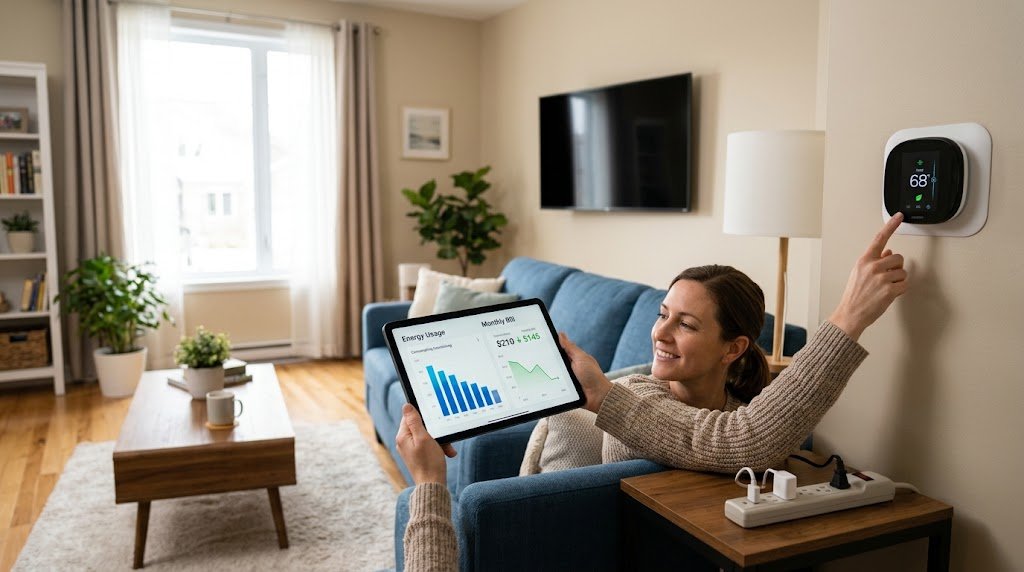
Since heating and cooling represent the largest share of most home energy bills, even small thermostat adjustments can produce meaningful savings over the course of a year. A commonly cited guideline is that adjusting your thermostat by just one degree, either warmer in summer or cooler in winter, can reduce heating and cooling energy use by a noticeable percentage, and adjusting several degrees during hours when the home is empty or everyone is asleep compounds those savings significantly. Programmable or smart thermostats make this kind of adjustment far easier to maintain consistently, since they can automatically lower heating or raise cooling during work hours and overnight without requiring you to remember to adjust the temperature manually every day. When setting a schedule, be realistic about your household’s actual routine rather than an idealized one, since a thermostat schedule that does not match when people are actually home tends to get overridden constantly, which defeats the purpose of automating the adjustment in the first place. It is also worth considering a slightly wider acceptable temperature range during transition seasons like spring and fall, since many homes can go without any heating or cooling at all during these milder periods if windows are opened at the right times of day.
Sealing Air Leaks and Improving Insulation
A surprising amount of heated or cooled air escapes homes through small gaps and cracks around windows, doors, and other openings, which forces heating and cooling systems to work harder and run longer than necessary to maintain a comfortable temperature. Weatherstripping around doors and windows is one of the most affordable fixes available, and it is worth checking these seals periodically, since weatherstripping tends to wear down and lose effectiveness over several years of regular use. Caulking gaps around window frames, baseboards, and any place where pipes or wiring enter the home from outside addresses another common source of air leakage that is often overlooked simply because these gaps are small and easy to miss during a casual inspection. Attic insulation deserves particular attention, since heat naturally rises and escapes through poorly insulated attics during colder months, while inadequate attic insulation also allows heat to build up excessively during summer, making cooling systems work harder as well. For homes with noticeably drafty rooms or consistently uneven temperatures between floors, a professional home energy audit can identify specific problem areas more precisely than a general inspection, often paying for itself within a year or two through the resulting energy savings.
Maintaining Your HVAC System Properly
An HVAC system that is not properly maintained has to work significantly harder to heat or cool a home, which translates directly into higher energy consumption regardless of how efficient the system was originally designed to be. Replacing air filters regularly, typically every one to three months depending on the filter type and household factors like pets or allergies, is one of the simplest and most impactful maintenance tasks, since a clogged filter restricts airflow and forces the system to run longer to achieve the same temperature. Scheduling annual professional maintenance, including cleaning coils and checking refrigerant levels for cooling systems, helps catch small inefficiencies before they become larger problems that increase both energy use and the risk of a costly system failure. Keeping outdoor units free of debris, leaves, and overgrown vegetation ensures that cooling systems specifically can release heat efficiently rather than working against restricted airflow around the unit. For households with an HVAC system that is approaching or beyond its expected lifespan, it is worth researching the energy efficiency improvements available in newer models, since even without immediate signs of failure, an aging system often becomes progressively less efficient each year it continues operating.
Water Heating: An Often Overlooked Energy Drain
Lowering Your Water Heater Temperature
Many water heaters are set to a higher temperature than most households actually need, and simply lowering the thermostat on your water heater to around 120 degrees Fahrenheit, which is generally considered both safe and comfortable for most household needs, can reduce water heating energy consumption noticeably without any perceptible difference in shower or dishwashing comfort. This adjustment is one of the easiest energy-saving changes available, since it typically requires nothing more than turning a dial on the unit itself, though it is worth checking your specific water heater’s manual for the exact temperature control location and any manufacturer guidance. Beyond comfort and energy savings, a lower water heater temperature also reduces the risk of scalding, which is a particularly relevant consideration for households with young children or elderly family members. It is worth revisiting this setting periodically, since water heaters are sometimes reset to a default higher temperature after maintenance or a power outage, quietly increasing energy consumption without anyone noticing the change.
Reducing Hot Water Usage in Daily Habits
Beyond adjusting the water heater itself, simple changes to daily hot water habits can meaningfully reduce the energy required to continuously reheat water throughout the day. Shorter showers make a noticeable difference over time, and installing a low-flow showerhead can reduce hot water usage significantly without a noticeable drop in water pressure for most households. Washing clothes in cold water for most loads, rather than defaulting to warm or hot water, is another straightforward change, since modern detergents are specifically formulated to clean effectively in cold water, and a large percentage of the energy used in a typical laundry cycle actually goes toward heating the water rather than running the machine itself. Running the dishwasher and washing machine only with full loads, rather than smaller partial loads more frequently, reduces the total number of cycles requiring hot water over the course of a month. Fixing leaky faucets, particularly hot water leaks, addresses a source of continuous water heating that many households do not realize is quietly adding to their energy bill, since even a slow, seemingly minor leak wastes a surprising volume of heated water over the course of a full day.
Considering a Tankless or Efficient Water Heater
For households currently using an older, conventional storage tank water heater, upgrading to a more efficient model can produce substantial long-term energy savings, though it does require a more significant upfront investment compared to simple behavioral changes. Tankless water heaters heat water on demand rather than continuously maintaining a large tank of hot water at a set temperature, which can reduce energy consumption meaningfully for many households, particularly those with lower overall hot water usage throughout the day. Heat pump water heaters represent another energy-efficient alternative, using electricity to move heat rather than generating it directly, which can be significantly more efficient than a standard electric resistance water heater, though they tend to work best in moderate climates and require adequate surrounding space to function properly. Before investing in a water heater upgrade, it is worth calculating your household’s typical hot water usage patterns and comparing the upfront cost against the expected annual energy savings, since the payback period varies considerably depending on your specific usage, local energy costs, and the size of household you are heating water for.
Appliances: Choosing and Using Them Efficiently
Understanding Energy Efficiency Ratings
When shopping for new appliances, energy efficiency ratings and certification labels provide a straightforward way to compare how much energy different models consume for similar functionality, making it easier to factor long-term operating costs into your purchasing decision rather than focusing on the upfront price alone. These ratings typically estimate annual energy consumption and associated costs under standardized usage conditions, allowing for a more accurate comparison between models than relying on general marketing claims about efficiency. It is worth paying particular attention to these ratings for appliances that run frequently or continuously, such as refrigerators, since these devices operate around the clock and even a modest efficiency improvement compounds into meaningful savings over the appliance’s full lifespan. For appliances used less frequently, such as a clothes dryer used only a few times per week, the efficiency rating still matters but the overall impact on your total energy bill will naturally be smaller compared to always-on appliances like refrigeration.
Maximizing Refrigerator and Freezer Efficiency
Refrigerators and freezers run continuously, making their efficiency particularly important for overall home energy consumption, and a few simple habits can meaningfully improve how efficiently these appliances operate. Keeping your refrigerator set to the manufacturer-recommended temperature range, typically between 35 and 38 degrees Fahrenheit, avoids the unnecessary energy consumption that comes from running the unit colder than actually necessary. Allowing adequate space around the back and sides of the refrigerator for proper airflow helps the compressor run more efficiently, since a unit pushed tightly against a wall or cabinet has to work harder to dissipate heat. Regularly checking and cleaning the door seals ensures that cold air is not slowly leaking out, which forces the compressor to run more frequently than necessary to maintain the set temperature. It is also worth avoiding the habit of keeping the refrigerator or freezer only partially full, since a reasonably full unit actually helps maintain a stable temperature more efficiently than a mostly empty one, though this should be balanced against overfilling to the point of restricting proper air circulation inside the unit.
Efficient Laundry and Dishwashing Habits
Washing machines, dryers, and dishwashers represent some of the more energy-intensive appliances in a typical home, but a handful of usage habits can reduce their overall energy consumption without requiring any equipment changes. Running full loads rather than multiple smaller loads maximizes the energy efficiency of each cycle, since the energy required to run a wash or dry cycle does not scale down proportionally with a smaller load size. Air-drying clothes when practical, whether through an outdoor clothesline or an indoor drying rack, eliminates dryer energy consumption entirely for those loads, and even partially air-drying clothes before a shorter dryer cycle can reduce the total energy used for that load. Using the dishwasher’s air-dry or energy-saving setting rather than the heated dry cycle reduces energy consumption meaningfully, since heated drying is one of the more energy-intensive phases of a typical dishwasher cycle. Cleaning the lint filter in your dryer before every single load is a small habit that meaningfully affects efficiency, since a clogged filter restricts airflow and forces the dryer to run longer to fully dry each load.
Lighting: Small Changes With Consistent Impact
Switching to LED Lighting
Replacing incandescent or older fluorescent bulbs with LED lighting remains one of the most straightforward and cost-effective energy-saving changes available to most households, since LED bulbs use significantly less energy than older bulb types while also lasting considerably longer before needing replacement. While LED bulbs typically cost more upfront than traditional incandescent bulbs, the combination of lower energy consumption and a much longer lifespan means they generally pay for themselves relatively quickly, particularly for light fixtures that are used frequently throughout the day. It is worth prioritizing this switch first in the rooms and fixtures used most often, such as kitchens, living rooms, and any lights left on for extended periods, since the energy savings scale directly with how much a given light fixture is actually used. Many LED bulbs are now available in a wide range of color temperatures and brightness levels, making it easy to match the warm or cool lighting tone you prefer in each room without sacrificing the energy efficiency benefits of the technology.
Making the Most of Natural Light
Relying more on natural daylight during daytime hours is a simple, cost-free way to reduce lighting energy consumption, and small adjustments to how you use window coverings and room layouts can meaningfully increase how much natural light reaches your living spaces. Keeping windows clean and unobstructed by heavy curtains during the day allows more natural light to enter a room, reducing the need for artificial lighting during daylight hours in most households. Light-colored walls and reflective surfaces help distribute natural light further into a room, meaning a room painted in lighter tones may require less supplemental lighting throughout the day compared to a room with darker walls that absorb more light. For homes considering renovations, adding or enlarging windows, or installing skylights in particularly dark rooms, can provide a longer-term reduction in daytime lighting needs, though this represents a more significant investment compared to simply adjusting how existing natural light is used.
Using Lighting Controls and Automation
Simple lighting controls, including motion sensors, timers, and smart switches, help reduce unnecessary energy consumption from lights left on in empty rooms, which is a surprisingly common source of wasted energy in many households. Motion-activated lighting works particularly well in spaces that are used briefly and inconsistently throughout the day, such as hallways, closets, bathrooms, and garages, since these are the rooms most likely to have lights accidentally left on after someone leaves. Smart switches and bulbs that can be controlled remotely through a phone app allow you to turn off lights you forgot about while away from home, which is particularly useful for households where lights are sometimes left on for an entire workday or overnight by mistake. Outdoor lighting is another area where timers or light sensors provide meaningful savings, since these fixtures often run on a fixed schedule regardless of actual need, and automating them to activate only after dusk and turn off at a set time overnight prevents unnecessary energy use during daylight hours or the middle of the night when the lighting serves little practical purpose.
Electronics and Standby Power: The Hidden Drain
Understanding Phantom or Standby Power
Many electronics and appliances continue drawing a small amount of power even when turned off but still plugged into an outlet, a phenomenon commonly known as phantom or standby power, and while any single device’s standby draw is small, the cumulative effect across an entire household with dozens of plugged-in devices can add up to a meaningful portion of your total electricity bill. Devices with a display clock, a remote control sensor, or a physical standby button, such as televisions, gaming consoles, cable boxes, and many kitchen appliances, are particularly common sources of standby power draw, since these features require the device to remain partially active even when not in use. Chargers left plugged into an outlet without a device attached also continue drawing a small amount of power, which is often overlooked simply because there is no obvious indicator light or device to suggest energy is still being consumed. While eliminating every source of standby power in a home is not realistic or necessary, identifying the devices that draw the most phantom power and specifically targeting those for unplugging or smart outlet control tends to produce more noticeable results than trying to address every single device in the house.
Using Smart Power Strips and Outlets
Smart power strips offer a practical solution for managing standby power without requiring you to remember to unplug individual devices throughout the day, since many models can automatically cut power to connected devices when a primary device, such as a television, is turned off. This is particularly useful for entertainment centers and home office setups, where multiple devices like speakers, gaming consoles, and monitors are often connected to the same power strip and can all be managed together as a single group. Some smart power strips also allow scheduling, enabling you to automatically cut power to specific outlets during hours when devices are reliably not in use, such as overnight or during a typical workday when a home office setup sits idle. For individual devices rather than groups, smart plugs offer a similar benefit, allowing remote control and scheduling through a smartphone app, which is particularly useful for devices in less frequently checked areas of the home. While the energy savings from any single smart power strip or plug are relatively modest, deploying them strategically across the highest standby power devices in a household can produce a noticeable cumulative reduction in overall electricity consumption.
Home Insulation and Building Envelope Improvements
Window Upgrades and Treatments
Windows are one of the least energy-efficient parts of most homes, since they allow heat transfer far more readily than insulated walls, making window-related improvements a meaningful opportunity for energy savings, particularly in older homes with single-pane windows. Upgrading to double or triple-pane windows with low-emissivity coatings can significantly reduce heat transfer in both directions, keeping homes cooler in summer and warmer in winter, though this represents one of the more expensive home energy improvements available and is usually best planned around a broader renovation timeline. For households not ready to invest in full window replacement, thermal curtains or cellular shades provide a more affordable way to reduce heat loss through windows, particularly during colder months, by adding an additional insulating layer between the glass and the room. Applying window film, a thin, transparent material applied directly to the glass, is another cost-effective option that can reduce heat gain during summer months without significantly affecting natural light or visibility through the window. Simply opening and closing curtains strategically based on the season and time of day, allowing sunlight in during winter afternoons for passive heating while blocking direct sun during summer, costs nothing and can meaningfully affect indoor temperature and the resulting heating or cooling demand.
Attic, Wall, and Floor Insulation
Beyond sealing obvious air leaks, ensuring adequate insulation throughout the broader structure of a home addresses a more fundamental source of energy loss that affects heating and cooling efficiency year-round. Attic insulation is generally considered the highest priority area, since heat loss through an inadequately insulated attic can be substantial, and adding insulation to an under-insulated attic is often one of the most cost-effective structural improvements available in terms of long-term energy savings relative to the upfront cost. Wall insulation, while more invasive and expensive to add to an existing home compared to attic insulation, becomes worth considering for older homes with minimal or no insulation in the walls, particularly if a renovation project already involves opening up wall cavities for other reasons. Insulating floors above unheated spaces, such as a garage or crawl space, addresses a commonly overlooked source of heat loss, particularly in homes where these areas were not prioritized during original construction. A professional home energy audit can identify which specific areas of a home’s insulation are underperforming most significantly, allowing you to prioritize improvements based on actual impact rather than guessing which area might matter most.
Daily Habits That Add Up Over Time
Beyond structural improvements and appliance choices, a collection of small daily habits contributes meaningfully to overall household energy consumption when practiced consistently over months and years. Turning off lights, fans, and electronics when leaving a room, while a simple and often-repeated piece of advice, genuinely does reduce unnecessary energy use, particularly in larger households where it is easy for these small oversights to accumulate throughout the day. Using ceiling fans in conjunction with air conditioning allows many households to raise their thermostat setting slightly while maintaining the same perceived comfort level, since moving air makes a room feel several degrees cooler than the actual temperature. Cooking with lids on pots and using appropriately sized burners for your cookware reduces the energy needed for stovetop cooking, while batch cooking or using smaller appliances like a toaster oven or slow cooker for smaller meals, rather than heating a full-size oven, can reduce cooking-related energy use. Being mindful of when high-energy tasks like laundry or dishwashing are run, particularly in regions with time-of-use electricity pricing, can also reduce costs even without reducing total consumption, since many utility providers charge lower rates during off-peak hours in the early morning or late evening. None of these individual habits produce dramatic savings on their own, but combined and practiced consistently across an entire household, they contribute a genuinely meaningful reduction in both energy consumption and the resulting monthly bill.
Understanding Your Utility Bill and Available Programs
Taking the time to actually read and understand your utility bill in detail often reveals opportunities for savings that are easy to miss when bills are paid automatically without close review. Many utility providers offer time-of-use pricing plans, where electricity costs less during off-peak hours, and shifting energy-intensive tasks like laundry or dishwashing to these cheaper periods can reduce costs without any change in actual energy consumption. It is also worth checking whether your utility provider or local government offers rebate programs for energy-efficient appliance purchases, insulation upgrades, or smart thermostat installations, since these programs can significantly offset the upfront cost of larger energy-saving investments. Some utility companies provide free or low-cost home energy audits as part of their standard service offerings, which can identify specific inefficiencies in your particular home more accurately than general advice that applies broadly across different climates and home types. Comparing your household’s energy usage to similar homes in your area, a comparison that many utility bills now include directly, can help you gauge whether your consumption is unusually high and worth investigating further, or already reasonably efficient compared to comparable households.
Considering Renewable Energy Options
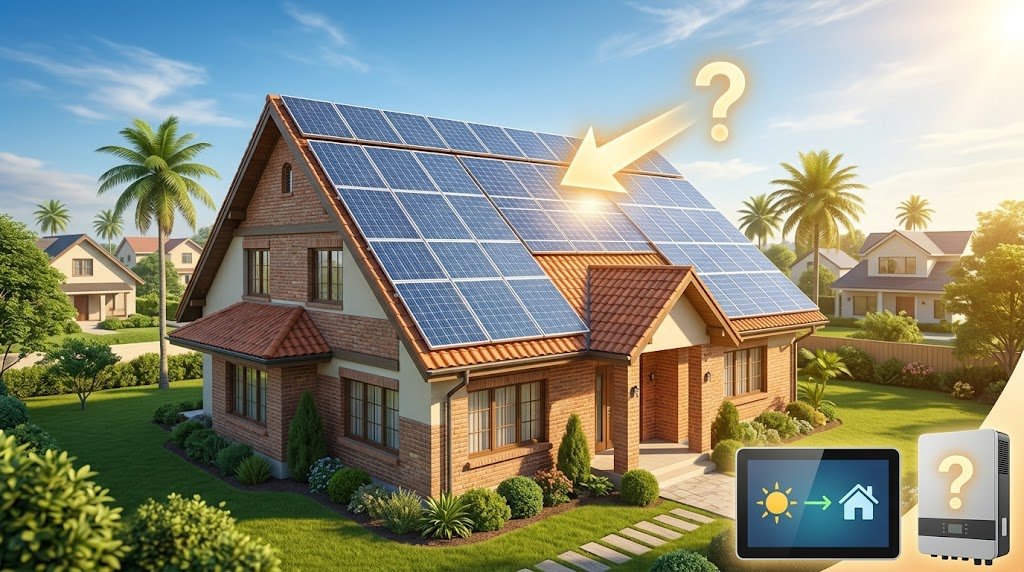
For households looking beyond efficiency improvements toward generating their own energy, solar panels represent the most accessible renewable energy option for most homeowners, and while the upfront investment is significant, it can substantially reduce or in some cases eliminate a household’s reliance on grid electricity over time. Before installing solar, it makes sense to complete the efficiency improvements covered throughout this guide first, since reducing your overall energy consumption allows you to size a solar system more accurately and cost-effectively rather than overbuilding capacity to offset avoidable waste. Many regions offer tax incentives, rebates, or net metering programs that allow homeowners to sell excess solar energy back to the grid, which can meaningfully improve the return on investment and shorten the payback period compared to the sticker price alone. Battery storage systems paired with solar panels are becoming increasingly popular as well, allowing households to store excess energy generated during the day for use during evening hours or power outages, though this adds to the overall cost of the system. For renters or homeowners not ready to commit to a full solar installation, some utility providers offer community solar programs, allowing customers to subscribe to a share of a larger, off-site solar installation and receive a credit on their electricity bill without needing to install anything on their own property. Researching local incentives and getting quotes from multiple installers is worth the time investment, since both equipment costs and available rebates vary considerably by region and can significantly affect whether solar makes financial sense for a specific household.
Key Points
- Heating, cooling, and water heating typically represent the largest share of home energy consumption, making them the most valuable areas to target first.
- Small thermostat adjustments, combined with a programmable or smart thermostat schedule, can produce meaningful savings without sacrificing comfort.
- Sealing air leaks and improving attic insulation are among the most cost-effective structural improvements for reducing heating and cooling energy use.
- Lowering your water heater temperature to around 120 degrees Fahrenheit and washing clothes in cold water reduce water heating energy with no noticeable downside.
- Switching to LED lighting and using motion sensors or smart controls reduces unnecessary lighting energy use throughout the home.
- Standby power from electronics left plugged in adds up over time, and smart power strips can help manage this hidden energy drain.
- Running full loads in washers, dryers, and dishwashers, and using energy-saving settings, improves the efficiency of appliances already in your home.
- Reviewing your utility bill for time-of-use pricing and available rebate programs can uncover additional savings beyond consumption changes alone.
Final Thoughts
Reducing home energy consumption and lowering electricity bills is rarely about one single dramatic change, but rather the combined effect of understanding where your energy actually goes and making consistent, targeted adjustments across heating, cooling, appliances, lighting, and daily habits. Starting with the areas that represent the largest share of typical energy use, particularly heating, cooling, and water heating, tends to produce the most noticeable results, while smaller changes like switching to LED bulbs, managing standby power, and adjusting daily habits add meaningful savings on top of those larger improvements over time. Not every household needs to pursue every strategy covered in this guide at once, and prioritizing based on your specific home, climate, and budget will always produce better results than trying to implement everything simultaneously. With a thoughtful, gradual approach, most households can achieve a genuinely lower electricity bill while maintaining the same level of comfort they are used to, proving that energy efficiency and everyday convenience do not have to be at odds with each other.
Frequently Asked Questions (FAQ)
What is the single most effective way to lower an electricity bill? Adjusting heating and cooling habits, including thermostat settings and sealing air leaks, generally produces the biggest impact for most households, since these systems typically account for the largest share of total home energy consumption.
Does unplugging electronics really make a noticeable difference? Standby power from individual devices is small, but the cumulative effect across many plugged-in electronics in a household can add up to a meaningful portion of an electricity bill, making it worth addressing the highest-draw devices specifically.
Is it worth replacing appliances just for energy efficiency? Replacing an appliance solely for efficiency is usually only worthwhile if the current appliance is old, inefficient, or near the end of its lifespan, since the energy savings need enough time to offset the cost of a new purchase.
How much can proper insulation actually save on energy bills? Improving attic insulation and sealing air leaks can meaningfully reduce heating and cooling costs, since poorly insulated homes often lose a significant amount of conditioned air, though the exact savings depend on your home’s current insulation level and local climate.
Do smart thermostats really save money compared to manual adjustments? Smart thermostats can produce consistent savings by automatically maintaining an efficient schedule, which tends to outperform manual adjustments simply because they do not rely on remembering to change the temperature at the right times throughout the day.